 NewNo. 020
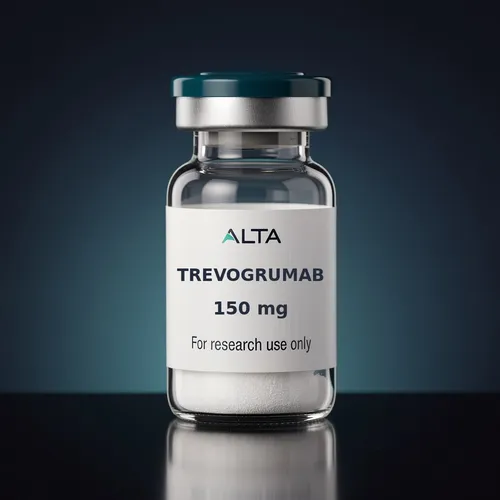
Trevogrumab
Anti-myostatin (GDF8) monoclonal antibody, REGN1033
- Size
- 150 mg
- HPLC
- n/a
- Lot
- on request
£17,999.00£119.99/mg
ALTA PEPTIDES supplies research peptides for laboratory use only. You must be at least 18 to enter.
By entering you agree these products are for research use only and not for human consumption.NewNo. 020
Anti-myostatin (GDF8) monoclonal antibody, REGN1033
 NewNo. 021
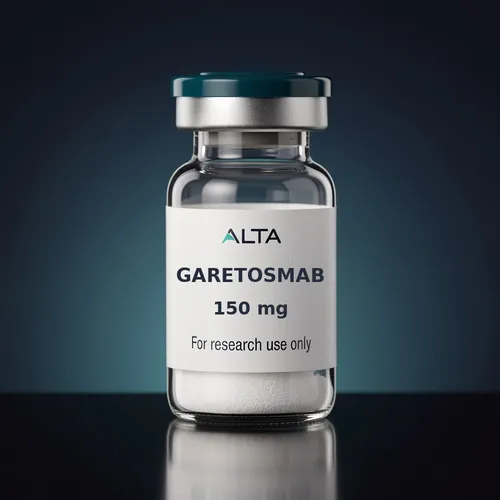
Anti-activin A monoclonal antibody, REGN2477
 NewNo. 022
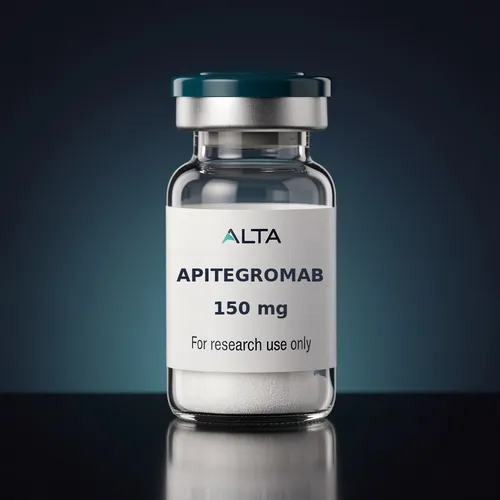
Anti-latent myostatin monoclonal antibody, SRK-015
 NewNo. 023
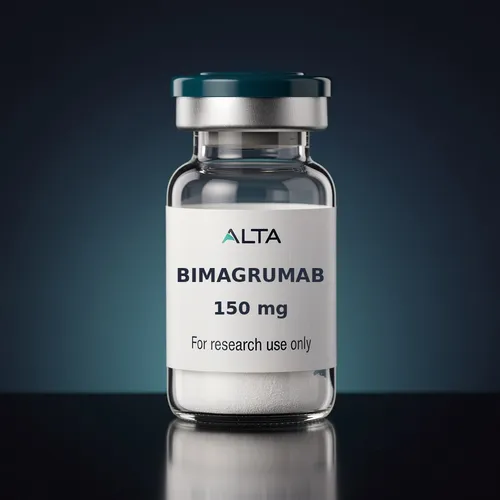
Anti-activin type II receptor monoclonal antibody, BYM338
Four monoclonal antibodies that act on the myostatin pathway, the signalling system that limits skeletal muscle growth. Each is supplied as a 150 mg research-grade vial with the manufacturer's lot certificate, for laboratory research only. These are biologics, not peptides, and are handled differently from the rest of the range.
In brief: Myostatin inhibitors block the signals that hold skeletal muscle mass down. ALTA PEPTIDES stocks four research-grade monoclonal antibodies on that pathway, each as a 150 mg vial: bimagrumab, apitegromab, trevogrumab and garetosmab, with the certificate of analysis pending for Trevogrumab, Garetosmab, Apitegromab and Bimagrumab, dispatched the same working day before 1pm. They are not the originator companies' products, are unlicensed in the UK, and are supplied strictly for laboratory research.
| Compound | Mechanism | Size | Price | Per mg | Certificate |
|---|---|---|---|---|---|
| TrevogrumabAnti-myostatin (GDF8) monoclonal antibody, REGN1033 | Anti-myostatin monoclonal antibody | 150 mg vial | £17,999.00 | £119.99/mg | Pending |
| GaretosmabAnti-activin A monoclonal antibody, REGN2477 | Anti-activin A monoclonal antibody | 150 mg vial | £17,999.00 | £119.99/mg | Pending |
| ApitegromabAnti-latent myostatin monoclonal antibody, SRK-015 | Anti-latent myostatin monoclonal antibody | 150 mg vial | £17,999.00 | £119.99/mg | Pending |
| BimagrumabAnti-activin type II receptor monoclonal antibody, BYM338 | Anti-ActRIIA/IIB monoclonal antibody | 150 mg vial | £17,999.00 | £119.99/mg | Pending |
Myostatin, also called GDF8, is made by muscle and acts as its main brake. It belongs to the TGF-beta superfamily and signals through the activin type II receptors, ActRIIA and ActRIIB, which it shares with activin A and several related ligands. Animals born without working myostatin carry far more muscle than normal, which is why blocking the pathway has been studied for decades in muscle-wasting disease, ageing and, more recently, weight loss on GLP-1 drugs. A myostatin inhibitor can act at three points: on mature myostatin, on myostatin before it is activated, or on the receptor that all these ligands share. The four antibodies here cover all three. Our myostatin inhibitors explained article walks through the pathway in more detail.
Bimagrumab binds the activin type II receptors themselves, so it blocks myostatin, activin A and related ligands at once; it has the largest effect on body composition of the four and the most obesity data, from the 72-week BELIEVE trial with semaglutide. Apitegromab binds myostatin in its latent, inactive forms and stops it being switched on, which makes it the most selective; its originator product is approved in the United States for spinal muscular atrophy. Trevogrumab binds mature myostatin and was tested with semaglutide in the COURAGE trial. Garetosmab binds activin A instead, was developed for fibrodysplasia ossificans progressiva, and appeared in obesity research only as the third arm of the COURAGE triplet.
The reason these antibodies are now searched alongside retatrutide and tirzepatide is muscle. Weight lost on a GLP-1 drug is typically about a quarter to a third lean mass. In COURAGE, adding trevogrumab to semaglutide prevented about half of the lean mass loss over 26 weeks; in EMBRAZE, apitegromab with tirzepatide kept 54.9% of the lean mass that would otherwise have gone; in BELIEVE, bimagrumab with semaglutide produced weight loss that was 92.8% fat. None of these changed total weight loss much on its own; they changed what the weight was made of. Our muscle loss on GLP-1 peptides article covers why that matters, and the safety record is set out on each product page, including the higher discontinuation rate in the COURAGE triplet and the fracture signal in the SMA trial.
The originator antibodies from Lilly, Regeneron and Scholar Rock are not sold outside clinical trials or prescription supply. What ALTA PEPTIDES supplies are research-grade antibodies: recombinant monoclonal antibodies produced by a third-party manufacturer for laboratory work. Each lot comes with the manufacturer's certificate of analysis, published on our certificates page, and identity and purity for an antibody are shown by methods such as SEC-HPLC and SDS-PAGE. A 150 mg vial of a cell-culture antibody costs far more to make than a synthetic peptide, which is reflected in the price, and the stack discount does not apply to antibodies.
For receptor-level blockade of every ligand at once, the research tool is bimagrumab. For myostatin alone, apitegromab (latent form, most selective) and trevogrumab (mature form) are the two options; garetosmab isolates activin A and is the natural control or partner for a myostatin-only design. All four are monoclonal antibodies of about 150 kDa: store them as the manufacturer's label directs, never shake them, and avoid repeated freezing and thawing. Incretin-receptor agonists for combination designs, such as retatrutide, are in weight and metabolic.
None of these antibodies is a controlled substance in the UK and none is licensed here. They are research-grade antibodies supplied strictly as laboratory reagents for in-vitro research, not for human or veterinary use.
Everything on this page is held in UK stock and dispatched the same working day before 1pm Monday to Friday by Royal Mail Tracked 48 (£4.95, free over £75) in plain packaging. Certificates: pending for Trevogrumab, Garetosmab, Apitegromab and Bimagrumab. That is the manufacturer's or supplier's paperwork published as received; ALTA's own independent test of each lot is added to the certificates page as it arrives. Any two of the single-compound vials here earn 10% off the peptide lines automatically, three earn 15% and four or more earn 20%; the stack builder shows the tiers.
Anything that blocks myostatin (GDF8) signalling, the main brake on skeletal muscle growth. The four antibodies here act on mature myostatin, latent myostatin, activin A or the shared activin type II receptors.
No. They are research-grade antibodies from a third-party manufacturer, not the originator products from Lilly, Regeneron or Scholar Rock, which are not sold outside trials or prescription supply.
No. They are monoclonal antibodies of about 150 kDa made in mammalian cell culture. They need antibody handling: correct temperature, no shaking and no repeated freeze-thaw.
None of the four is a controlled substance in the UK and none is licensed here. ALTA PEPTIDES supplies them strictly as laboratory reagents for in-vitro research, not for human or veterinary use.
No. The stack discount covers single-compound peptides only; the antibodies are excluded.
Related: certificates of analysis, peptide calculator, build a stack, FAQ, all research peptides.
Every product on this site is sold as a laboratory reagent for in-vitro and analytical research. Not for human or veterinary use, not a medicine, not a supplement. By ordering you confirm you are 18 or over and accept our research use policy.