 No. 017
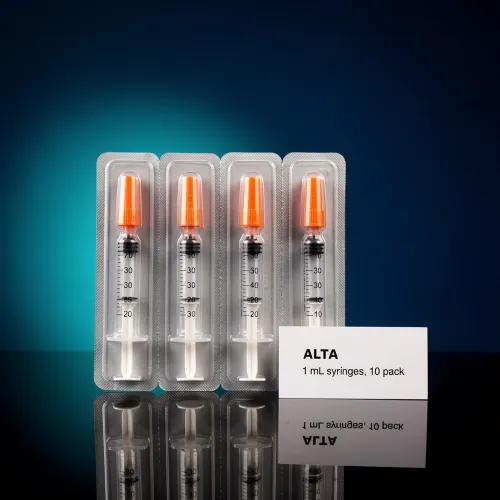
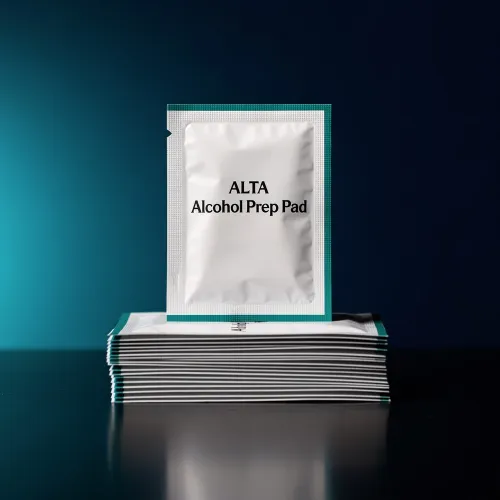
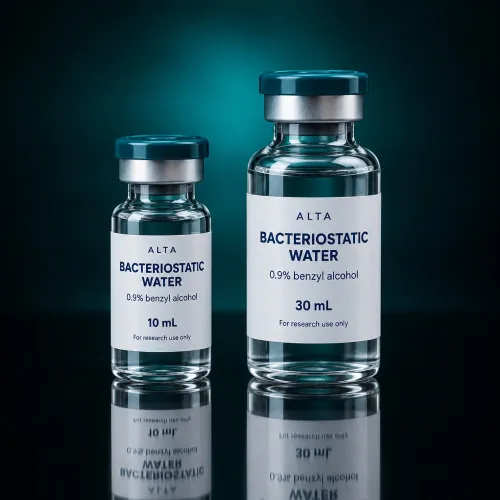
Bacteriostatic water in 10 mL and 30 mL vials, 1 mL U-100 insulin syringes and 70% alcohol swabs: everything needed to reconstitute lyophilised peptides in the laboratory. Ships in the same parcel as any peptide order. The calculator covers the arithmetic.
In brief: Reconstitution supplies are the diluent and consumables used to turn a lyophilised peptide into a solution in the laboratory. ALTA PEPTIDES stocks bacteriostatic water (10 mL and 30 mL), 1 mL U-100 insulin syringes and 70% alcohol swabs in UK stock, shipped in the same parcel as any peptide order and dispatched the same working day before 1pm.
The water and accessories range compared
| Item | Contents | Sizes | Price |
|---|---|---|---|
| Bacteriostatic Water | 0.9% benzyl alcohol, sterile | 10 mL / 30 mL | £5.99 – £10.99 |
| Insulin Syringes 1 mL | 31G x 8 mm, U-100, pack of 10 | Pack of 10 | £6.99 |
| Alcohol Prep Swabs | 70% isopropyl alcohol, pack of 100 | Pack of 100 | £4.99 |
What each item does
Bacteriostatic water is sterile water with 0.9% benzyl alcohol. The preservative inhibits bacterial growth in the vial after the stopper has been punctured, which is what makes it the standard diluent for peptides drawn from more than once; the in-use life is 28 days from first puncture. Sterile water without preservative is for single-use reconstitution only. Tap, bottled or boiled water is not sterile, has the wrong pH and degrades the peptide. The bacteriostatic water explainer covers the chemistry.
Insulin syringes here are 1 mL U-100 with a fixed 31G, 8 mm needle, individually sealed in packs of 10. The 1 mL barrel gives the widest useful measuring range, 100 units to the millilitre; 31G punctures a stopper cleanly many times without coring it; the fixed needle has minimal dead space. Alcohol prep swabs are 70% isopropyl alcohol in packs of 100, for cleaning the stopper before each puncture. 70% rather than 99% because water is needed for the alcohol to penetrate microbial cell walls.
Choosing between them
Bacteriostatic water 10 mL covers a small programme; 30 mL suits several vials reconstituted over a few weeks, bearing in mind the 28-day in-use life once opened. Buying bacteriostatic water UK-wide usually means choosing between these two sizes, and both are the same 0.9% benzyl alcohol preparation. One pack of syringes and one pack of swabs cover most single-vial work. The peptide calculator converts vial amount and diluent volume into concentration, millilitres and syringe units, and the reconstitution guide walks through the bench procedure. Every peptide category on the site links back here: recovery and repair, copper and skin, brain and focus, longevity and cellular.
Buying in the UK
Bacteriostatic water, syringes and swabs are ordinary laboratory consumables, supplied here for reconstituting research peptides. They are not medicines; like everything on the site they are sold to buyers aged 18 or over under the research use policy.
Everything on this page is held in UK stock and dispatched the same working day before 1pm Monday to Friday by Royal Mail Tracked 48 (£4.95, free over £75) in plain packaging. Certificates: each lot published with its certificate of analysis. Water, syringes and swabs are excluded from the automatic stack discount but ship free in any order over £75.
Questions
Sterile water containing 0.9% benzyl alcohol as a preservative, used to reconstitute lyophilised peptides in multi-use vials. Discard 28 days after first puncture.
Bacteriostatic for any vial that will be drawn from more than once; sterile water for injection only for single-use reconstitution, discarding the remainder.
10 mL for one or two vials reconstituted at once; 30 mL for several vials over a few weeks. The calculator shows how much diluent gives readable syringe volumes for a given vial.
No. The automatic stack discount applies to single-compound peptide vials only; water, syringes and swabs are excluded but ship free in any order over £75.
Guides for this category
- How to reconstitute peptides: a laboratory guideWhich diluent to use, how to work out the volume for a target concentration, and the handling steps that keep a lyophilised peptide intact.
- Bacteriostatic water explained: what it is, how it differs from sterile water, and where to get it in the UKThe diluent every peptide laboratory keeps on the shelf: what the benzyl alcohol does, why the 28-day rule exists, when plain sterile water is the better choice, and what to look for when buying it in the UK.
- Insulin syringes explained: sizes, gauges, the U-100 scale and laboratory useWhy a 1 mL insulin syringe is the standard tool for measuring small volumes of diluent, what the numbers on the packet mean, and how to handle and dispose of them.
- How to get retatrutide in the UK: what is legal, the trial results, the release date and how to check a vendorRetatrutide is an unlicensed investigational compound sold in the UK as a research reagent. Where that leaves a buyer legally, what separates a credible vendor from a risky one, and what the market charges.
- Does filtering peptides remove bacteria? Sterile filtration explainedPassing a peptide solution through a 0.22 micron syringe filter removes bacteria and fungi; it does not remove viruses, endotoxin or chemical contaminants, and it can remove some of the peptide. What sterile filtration is for and where it fits with bacteriostatic water and lot testing.
- Retatrutide vs tirzepatide vs semaglutide: receptors, licences and trial resultsOne licensed GLP-1 agonist, one licensed dual agonist, one unlicensed triple agonist: how the three differ on the published record.
- GLP-1 receptor agonists explained: incretins, the peptides from exenatide to retatrutide, and where each standsThe incretin story from a lizard's saliva to a triple agonist: what GLP-1 and GIP do, how the peptides were engineered to last a week, and which are licensed medicines versus research compounds.
Other research areas
- Weight & Metabolic: GLP-1 family and mitochondrial peptides studied for energy balance and metabolism.
- Recovery & Repair: Peptides studied in tissue, tendon and gut models.
- Copper & Skin: GHK-Cu and copper-peptide stacks studied in dermal and wound models.
- Brain & Focus: Nootropic peptides from the Russian literature, supplied as lyophilised powder.
- Growth Hormone: GHRH analogues and secretagogues studied for pulsatile GH release.
- Longevity & Cellular: Peptides studied in ageing, telomere and mitochondrial research.
- Libido & Tanning: Melanocortin receptor agonists.
- Sleep: Delta sleep-inducing peptide.
- Myostatin Antibodies: Research-grade antibodies against myostatin, activin A and the activin type II receptors.
Related: certificates of analysis, peptide calculator, build a stack, FAQ, all research peptides.
Research use only
Every product on this site is sold as a laboratory reagent for in-vitro and analytical research. Not for human or veterinary use, not a medicine, not a supplement. By ordering you confirm you are 18 or over and accept our research use policy.