 No. 007
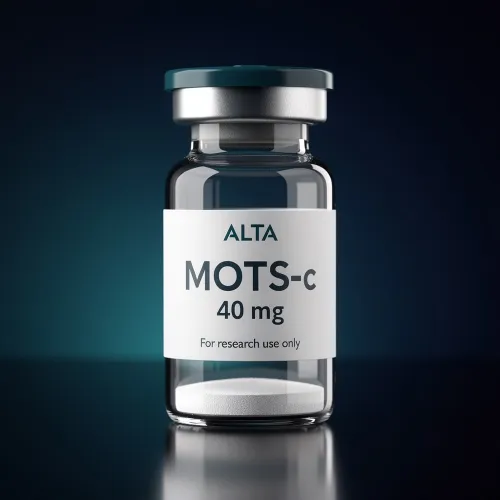
MOTS-c
Mitochondrial open reading frame of the 12S rRNA-c
- Size
- 40 mg
- HPLC
- 99.83%
- Lot
- 10377
£74.99£1.87/mg
ALTA PEPTIDES supplies research peptides for laboratory use only. You must be at least 18 to enter.
By entering you agree these products are for research use only and not for human consumption.No. 007
Mitochondrial open reading frame of the 12S rRNA-c
 No. 008
 NewNo. 009
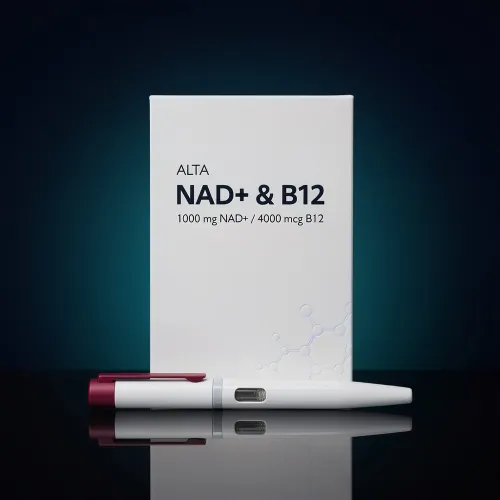
Synedica pre-filled pen: 1,000 mg NAD+ with 4,000 mcg vitamin B12
Peptides studied in ageing, telomere and mitochondrial research. Epitalon (Ala-Glu-Asp-Gly) comes from Russian gerontology and is studied for telomerase activation in cell culture; MOTS-c is a mitochondrial-derived signalling peptide studied in metabolic and exercise models. The evidence base for both is thinner than for the repair peptides, and the product pages say so. Lot-tested, UK stock, same-day dispatch.
In brief: Longevity peptides are compounds studied in ageing, telomere and mitochondrial research. ALTA PEPTIDES stocks Epitalon (50 mg), MOTS-c (40 mg) and the Synedica NAD+ and B12 pre-filled pen in UK stock, with the certificates of analysis published for MOTS-c (lot 10377) and Epitalon (lot WL-ET10-P00518), the manufacturer's batch certificate for the NAD+ & B12 Pen available on request, dispatched the same working day before 1pm. Research use only.
| Compound | Mechanism | Size | Price | Per mg | Certificate |
|---|---|---|---|---|---|
| MOTS-cMitochondrial open reading frame of the 12S rRNA-c | Mitochondrial-derived peptide; AMPK via folate cycle | 40 mg vial | £74.99 | £1.87/mg | Lot 10377 (supplier’s third-party report) |
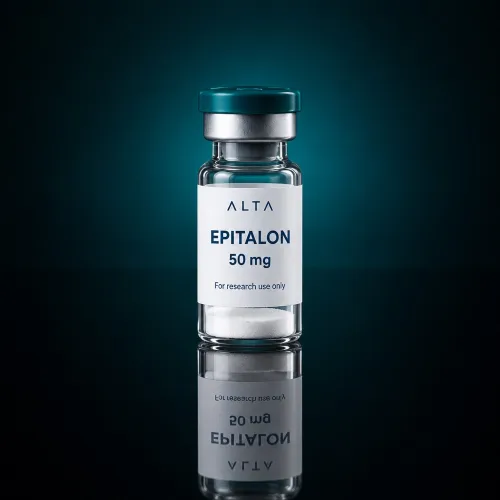
| EpitalonEpithalon, Ala-Glu-Asp-Gly | Pineal tetrapeptide; reported telomerase induction | 50 mg vial | £59.99 | £1.20/mg | Lot WL-ET10-P00518 (supplier’s third-party report) |
| NAD+ & B12 PenSynedica pre-filled pen: 1,000 mg NAD+ with 4,000 mcg vitamin B12 | Redox coenzyme plus methylation cofactor | Pre-filled pen, 1,000 mg + 4,000 mcg | £119.99 | per pen | Manufacturer batch certificate on request |
Epitalon (Ala-Glu-Asp-Gly) comes from the St Petersburg Institute of Bioregulation and Gerontology. Cell-culture studies report telomerase activation and telomere lengthening in human somatic cells; rodent and Drosophila studies report extended mean lifespan and reduced spontaneous tumour incidence; small Russian clinical studies in elderly patients report normalisation of melatonin rhythm. None of the human work meets modern controlled-trial standards, there has been little Western replication, and it is not licensed outside Russia.
MOTS-c is the best-known of the mitochondrial peptides, a 16-residue sequence encoded in mitochondrial DNA and discovered in 2015. In mice it improved insulin sensitivity, prevented diet-induced obesity and increased exercise capacity in aged animals, with effects mediated by AMPK activation and folate-cycle regulation. Circulating levels fall with age in humans. A synthetic analogue (CB4211) completed a phase 1 trial; MOTS-c itself has no controlled human efficacy data. Our articles what is MOTS-c and what is epitalon cover each literature in full.
The NAD+ and B12 pen is not a peptide. NAD+ is the coenzyme at the centre of cellular redox metabolism and the substrate for sirtuins, PARPs and CD38, and its decline with age is one of the most replicated findings in ageing biology; vitamin B12 is the cofactor for methionine synthase and methylmalonyl-CoA mutase. The pen is a sealed Synedica product supplied as received. Whether the pairing has any additive effect is not established in any controlled study.
Three unrelated mechanisms. A telomere, pineal or melatonin-rhythm design points to Epitalon; a mitochondrial, AMPK or exercise-capacity design points to MOTS-c; a sirtuin, PARP or redox assay points to NAD+. Epitalon and MOTS-c are the Longevity pair preset in the stack builder at the 10% tier; the pen is a finished third-party product and does not count towards the stack discount. MOTS-c also sits next to retatrutide in metabolic designs (see weight and metabolic), and Epitalon next to DSIP on circadian readouts (see sleep). The evidence base across this category is thinner than for the repair peptides, and the product pages say so.
Epitalon and MOTS-c are not controlled substances in the UK; Epitalon is licensed in Russia only and MOTS-c nowhere, so both are unlicensed research chemicals, legal to buy and possess, supplied for laboratory use only. NAD+ and vitamin B12 are not controlled either, but B12 for injection is a prescription-only medicine when supplied for human use, which is why the pen is supplied strictly as a laboratory reagent.
Everything on this page is held in UK stock and dispatched the same working day before 1pm Monday to Friday by Royal Mail Tracked 48 (£4.95, free over £100) in plain packaging. Certificates: published for MOTS-c (lot 10377) and Epitalon (lot WL-ET10-P00518), the manufacturer's batch certificate for the NAD+ & B12 Pen available on request. That is the manufacturer's or supplier's paperwork published as received; ALTA's own independent test of each lot is added to the certificates page as it arrives. Any two of the single-compound vials here earn 10% off the peptide lines automatically, three earn 15% and four or more earn 20%; the stack builder shows the tiers.
Peptides studied in ageing research: Epitalon for telomerase and melatonin rhythm, MOTS-c for mitochondrial and metabolic signalling. The research is cell-culture, rodent and small uncontrolled human studies; no longevity peptide is a licensed medicine.
Short peptides encoded in mitochondrial DNA rather than the nucleus. MOTS-c, from the 12S rRNA region, is the most studied; humanin is another. They are studied as signalling molecules that respond to metabolic stress.
No. It is a dinucleotide coenzyme. It sits in this category because its research overlaps with the ageing and mitochondrial literature, and the pen is supplied as a research reagent alongside the two peptides.
MOTS-c: a third-party report from ILS Laboratories, San Diego, ISO/IEC 17025, obtained by our supplier on its own vial from lot 10377, is published on the certificates page (purity 99.83% by HPLC). Supplier-provided report on a 10 mg vial from this lot. ALTA sells the 40 mg vial from the same lot; our own test of the 40 mg vial is pending. Epitalon: a third-party report from BTLabs, West Palm Beach, Florida, obtained by our supplier on its own vial from lot WL-ET10-P00518, is published on the certificates page (purity 99.6% by HPLC). Supplier-provided report on a 10 mg vial from this lot. ALTA sells the 100 mg vial from the same lot; our own test of the 100 mg vial is pending. The NAD+ & B12 Pen is a sealed third-party product supplied as received; the manufacturer's batch certificate for the batch number on the box is available on request. ALTA's own independent third-party test of each lot is pending and is published on the same page as it arrives; no lot is described as independently tested until it is.
Related: certificates of analysis, peptide calculator, build a stack, FAQ, all research peptides.
Every product on this site is sold as a laboratory reagent for in-vitro and analytical research. Not for human or veterinary use, not a medicine, not a supplement. By ordering you confirm you are 18 or over and accept our research use policy.