 Best sellerNo. 001
 No. 002
 StackNo. 003
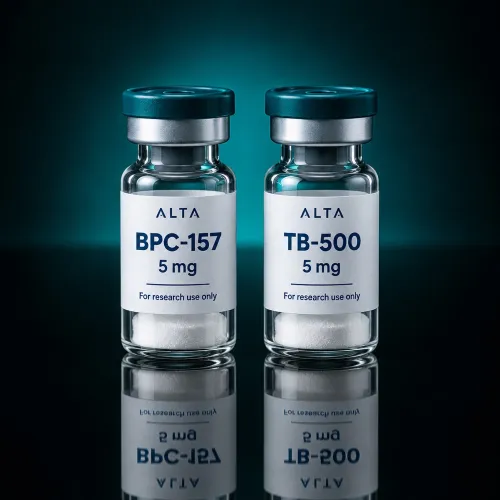
Wolverine Stack
BPC-157 5 mg + TB-500 5 mg, two vials
- Size
- 5 mg + 5 mg
- HPLC
- ≥99%
- Lot
- per vial
£37.99£3.80/mg
 NewNo. 004
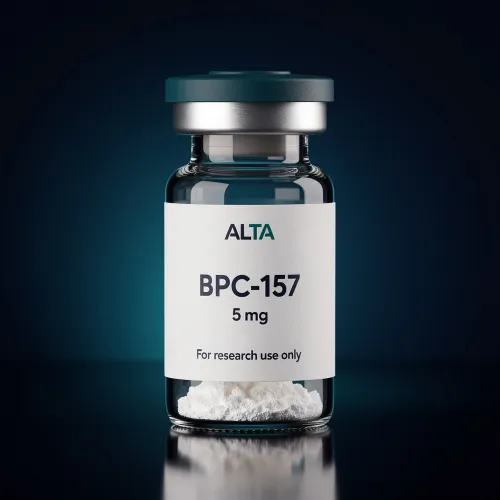
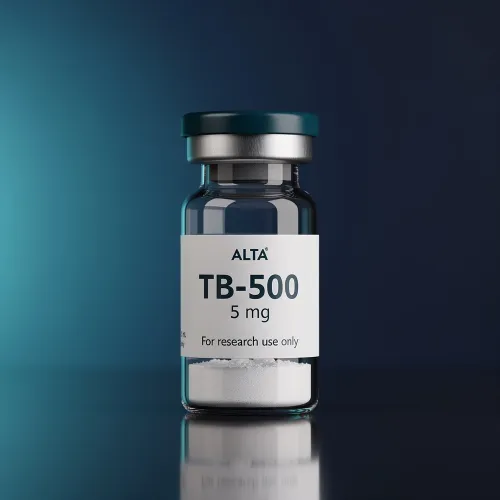
BPC-157 and TB-500 are the two most studied peptides in animal models of tendon, ligament, muscle and gut-lining repair, and the most searched research peptides in the UK after the GLP-1s. BPC-157 acts on growth-factor signalling and angiogenesis at injury sites; TB-500 (thymosin beta-4), the actin-binding protein, on cell migration. They are stocked individually in 5 mg vials and together as the Wolverine Stack. All are unlicensed research chemicals, legal to possess, prohibited in tested sport, and supplied for laboratory use only.
In brief: Recovery peptides are compounds studied in animal models of tendon, ligament, muscle and gut-lining repair. ALTA PEPTIDES stocks BPC-157 (5 mg), TB-500 (5 mg), the pair as the Wolverine Stack, and KPV (10 mg) in UK stock, with the certificates of analysis published for TB-500 (lot 2607024) and KPV (lot 2607091), pending for BPC-157, dispatched the same working day before 1pm. Supplied for laboratory research only.
The recovery and repair range compared
| Compound | Mechanism | Size | Price | Per mg | Certificate |
|---|---|---|---|---|---|
| BPC-157Body Protection Compound 157 | Angiogenic and nitric-oxide signalling (VEGFR2) | 5 mg vial | £17.99 | £3.60/mg | Pending |
| TB-500Thymosin Beta-4 (full-length, 43 residues) | Actin sequestration; drives cell migration | 5 mg vial | £24.99 | £5.00/mg | Lot 2607024 (manufacturer certificate) |
| Wolverine StackBPC-157 5 mg + TB-500 5 mg, two vials | Two separate vials; see the component compounds | 5 mg + 5 mg vials | £37.99 | £3.80/mg | BPC-157: Pending; TB-500: Lot 2607024 (manufacturer certificate) |
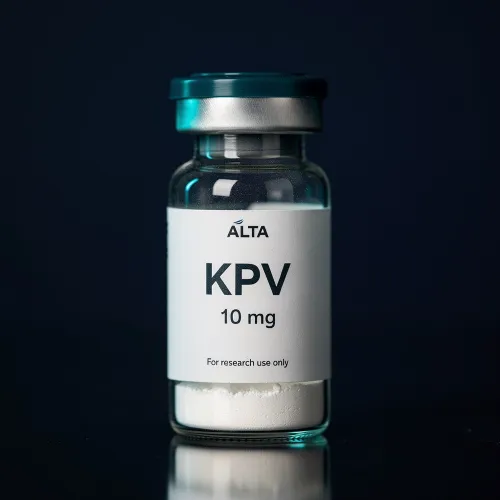
| KPVLys-Pro-Val, C-terminal tripeptide of alpha-MSH | Alpha-MSH fragment; melanocortin-independent anti-inflammatory signalling | 10 mg vial | £29.99 | £3.00/mg | Lot 2607091 (manufacturer certificate) |
What the research covers
BPC-157 is the most cited of the peptides for healing. Rodent studies from the Zagreb group report accelerated healing of transected Achilles tendon, medial collateral ligament and skeletal muscle, protection of the stomach lining against NSAID and alcohol injury, and angiogenesis at wound sites through VEGF and nitric-oxide signalling. That record is why it heads most lists of peptides for injury recovery, peptides for tendon repair and peptides for gut health. Almost all of it comes from a single laboratory, human data is limited to small uncontrolled reports, and no regulator has licensed it.
TB-500 is thymosin beta-4, the actin-binding protein. Animal studies report faster dermal wound closure, reduced inflammation and improved migration of cells into damaged tissue, with cardiac work in rodent and pig infarct models. Full-length thymosin beta-4 has been through early human trials for corneal and dermal wounds; the synthetic fragment itself has not been through controlled human trials.
KPV, the C-terminal tripeptide of alpha-MSH, is the gut-inflammation compound of the group. In cell culture it reduces NF-kB-dependent cytokine production; in rodent colitis models both injected and orally delivered KPV reduced inflammation scores and tissue damage; dermatitis models and antimicrobial assays round out the literature. There are no controlled human trials.
The Wolverine Stack is BPC-157 and TB-500 as two separate vials. The two are frequently studied together because their mechanisms differ, but there are no published studies of the pairing itself, so the individual literatures are what apply.
Choosing between them
The mechanism column is the practical guide. A tendon, ligament or muscle model with a vascular component points to BPC-157; a cell-migration or wound-closure assay points to TB-500; a colitis or cytokine-signalling design points to KPV. A design that wants to separate angiogenic signalling from cell migration runs BPC-157 and TB-500 side by side, which is what the Wolverine Stack packages at a lower price than the two vials bought separately. KPV alongside BPC-157 is the pairing gut-model designs most often run, and all four recovery compounds plus GHK-Cu make up the KLOW preset in the stack builder. For injury-recovery searches that are really about skin and matrix, see copper and skin.
Buying in the UK
BPC-157, TB-500 and KPV are not controlled substances in the UK and none is a licensed medicine anywhere. They are research chemicals, legal to buy and possess, sold for laboratory use only and never for human use; BPC-157 and TB-500 are prohibited in tested sport by WADA.
Everything on this page is held in UK stock and dispatched the same working day before 1pm Monday to Friday by Royal Mail Tracked 48 (£4.95, free over £75) in plain packaging. Certificates: published for TB-500 (lot 2607024) and KPV (lot 2607091), pending for BPC-157. That is the manufacturer's or supplier's paperwork published as received; ALTA's own independent test of each lot is added to the certificates page as it arrives. Any two of the single-compound vials here earn 10% off the peptide lines automatically, three earn 15% and four or more earn 20%; the stack builder shows the tiers, and pre-built stacks are excluded.
Questions
BPC-157 has the largest tendon literature: rodent studies report faster healing of transected Achilles tendon and medial collateral ligament. TB-500 is studied for cell migration and wound closure rather than tendon specifically. Neither has controlled human trial data for tendon repair, and neither is a licensed medicine.
BPC-157, which was isolated from gastric juice and is studied in rodent models of gastric and intestinal lesions and colitis, and KPV, which is studied in rodent colitis models and NF-kB cytokine assays. Both are supplied here as research reagents, not for consumption.
Yes. BPC-157, TB-500 and KPV are not controlled substances in the UK; they are unlicensed research chemicals, legal to buy and possess, sold for laboratory use only and not for human use. BPC-157 and TB-500 are prohibited in tested sport by WADA.
BPC-157: the certificate for the current lot is pending publication on the certificates page. TB-500: the manufacturer's QC batch certificate for lot 2607024 is published on the certificates page, reporting purity 99.68% by HPLC and identity by mass spectrometry. KPV: the manufacturer's QC batch certificate for lot 2607091 is published on the certificates page, reporting purity 99.5% by HPLC and identity by mass spectrometry. ALTA's own independent third-party test of each lot is pending and is published on the same page as it arrives; no lot is described as independently tested until it is.
Guides for this category
- What is BPC-157? Origin, sequence and what the research coversWhere the Body Protection Compound came from, why it is unusually stable, and what more than three decades of animal studies have and have not shown.
- What is TB-500? Thymosin beta-4, the full protein and the fragment, and the research behind themThe 43-residue protein thymosin beta-4 and the seven-residue fragment, both sold as TB-500, which one we supply, and what the cell migration research actually measured.
- What is KPV? The anti-inflammatory tripeptide from alpha-MSHKPV is the three-residue C-terminal fragment of the pigmentation hormone alpha-MSH, studied since the 1990s for anti-inflammatory activity that does not depend on melanocortin receptors. What the research reports and where it fits in the KLOW blend.
- The Wolverine stack explained: BPC-157 vs TB-500, and why the two are pairedThe Wolverine stack is a forum name for BPC-157 and TB-500 supplied together. What each peptide is, why the tissue-repair research pairs them, what a blend vial is versus two vials, and what it costs.
- How to store peptides, and how long lyophilised peptides last at room temperatureTemperatures, light, moisture, freeze-thaw cycles and aliquoting: what actually determines how long a peptide stays within specification.
- How to read a peptide certificate of analysisHPLC purity, mass spec identity, net peptide content and endotoxin: what each line on a COA means and which ones sellers tend to leave out.
- Are peptides legal in the UK? Research peptides and the law explainedWhich laws actually apply to research peptides in the UK, what a supplier can and cannot do, and why research use only is a legal condition rather than a slogan.
Other research areas
- Weight & Metabolic: GLP-1 family and mitochondrial peptides studied for energy balance and metabolism.
- Copper & Skin: GHK-Cu and copper-peptide stacks studied in dermal and wound models.
- Brain & Focus: Nootropic peptides from the Russian literature, supplied as lyophilised powder.
- Growth Hormone: GHRH analogues and secretagogues studied for pulsatile GH release.
- Longevity & Cellular: Peptides studied in ageing, telomere and mitochondrial research.
- Libido & Tanning: Melanocortin receptor agonists.
- Sleep: Delta sleep-inducing peptide.
- Myostatin Antibodies: Research-grade antibodies against myostatin, activin A and the activin type II receptors.
- Water & Accessories: Bacteriostatic water, syringes and swabs for reconstitution.
Related: certificates of analysis, peptide calculator, build a stack, FAQ, all research peptides.
Research use only
Every product on this site is sold as a laboratory reagent for in-vitro and analytical research. Not for human or veterinary use, not a medicine, not a supplement. By ordering you confirm you are 18 or over and accept our research use policy.