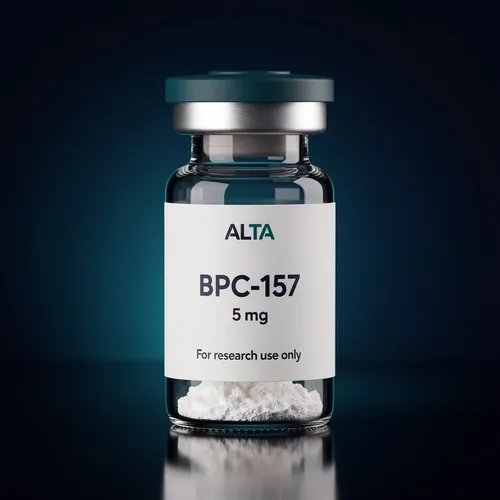
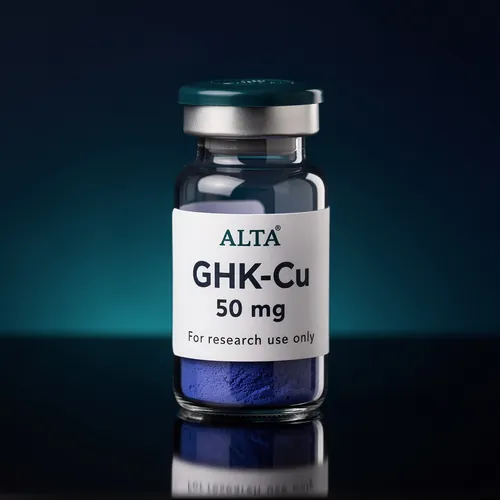
A certificate of analysis (COA) is the document that turns "99% pure" from a marketing phrase into a measurement. For a research peptide it should tell you what the material is, how much of it is actually the peptide you ordered, and what else is in the vial. Reading one takes a couple of minutes once you know what each section means. This guide walks through a typical peptide certificate of analysis, explains the two core tests, and flags the omissions that distinguish a genuine third-party certificate from a decorative one.
The header: what, which lot, who tested it
The top of the certificate should name the compound, its sequence or a recognised identifier (CAS number, molecular formula), the lot or batch number, the date of analysis, and the laboratory that performed it. The lot number is the link between the document and the vial in your hand: if the number on the vial label does not match the certificate, the certificate tells you nothing about your material. A certificate with no lot number, or one that is reused across many months of stock, is not a certificate of analysis for anything in particular.
Who tested it matters as much as what was found. A certificate from the manufacturer's own quality department is standard in the industry and is not worthless, but it is the supplier grading its own homework. A certificate from an independent laboratory, with that laboratory's name and accreditation on the document, is the higher standard, and it is the one we publish for every lot on our certificates page.
Identity: mass spectrometry
Purity is meaningless if the material is the wrong compound, so identity comes first. Mass spectrometry (usually electrospray ionisation, ESI-MS, or MALDI-TOF) measures the molecular mass of the peptide and compares it with the theoretical mass calculated from the sequence. For BPC-157 the theoretical mass is 1419.5 g/mol; a certificate should report an observed mass within a fraction of a dalton of that figure. Because ESI produces multiply charged ions, the raw spectrum shows peaks at (M+2H)/2, (M+3H)/3 and so on; a good certificate either deconvolutes these to the neutral mass or labels the charge states so you can check the arithmetic yourself.
A mass that matches confirms the peptide has the right composition. It does not by itself prove the amino acids are in the right order, since isomers share a mass, but combined with HPLC retention time against a reference standard it is the accepted identity test for synthetic peptides.
Purity: HPLC
High-performance liquid chromatography separates the components of the sample by how strongly they interact with a column as a solvent gradient runs through it. The detector, usually ultraviolet absorbance at 214 or 220 nm where the peptide bond absorbs, records a trace of peaks. HPLC purity is the area of the main peak divided by the total area of all peaks, expressed as a percentage. When we say a lot is 99.2% pure, that is what we mean: 99.2% of the UV-absorbing material eluting from the column was the target peptide, and 0.8% was something else, typically truncated sequences, deletion sequences or oxidised variants left over from synthesis.
Look for the chromatogram itself on the certificate, not just the number. A trace with one sharp main peak and a flat baseline tells its own story. Several peaks of similar height, a broad main peak, or a purity figure with no trace attached are all reasons to ask questions. Also check the method: column type, gradient and wavelength should be stated, because purity figures from different methods are not directly comparable.
Net peptide content
This is the figure most sellers omit and the one that matters most for quantitative work. HPLC purity describes the composition of the peptide fraction; it says nothing about how much of the powder in the vial is peptide at all. Lyophilised peptides carry counter-ions from purification (trifluoroacetate, or acetate if the supplier has exchanged it) and residual water, together typically 5 to 20% of the gross mass. Net peptide content, measured by amino acid analysis or nitrogen determination, tells you that a "10 mg" vial contains, say, 8.6 mg of peptide. If your protocol depends on concentration, this is the number to use.
Other lines you may see
Appearance (white lyophilised powder, or blue for copper peptides). Solubility in water at a stated concentration. Water content by Karl Fischer titration. Counter-ion identity and content, usually TFA. Endotoxin by LAL assay, expressed in endotoxin units per milligram, which is relevant to cell-culture work because endotoxin contamination confounds inflammatory readouts. Sterility is not normally claimed for lyophilised research peptides and a certificate that does claim it should say how.
Red flags
No lot number. No laboratory name. A purity figure with no chromatogram. A chromatogram that has clearly been cropped. The same certificate image reused across different products or sizes. Purity stated as 99.9% or higher without a method that could resolve it. A certificate dated years before the product was listed. Any of these means the document is decorating the listing rather than describing the vial.
How we do it
Each lot we stock is sent to an independent UK laboratory for identity by mass spectrometry and purity by HPLC before it is released for sale. The certificate, with lot number, is published on the certificates page and the same lot number is printed on the vial label. If a lot does not meet our specification of 99% or better it is not sold. All products are supplied for laboratory research only under our research use policy.