Peptides are chains of amino acids joined by amide bonds, and every one of those bonds is a site for hydrolysis. Add side chains that oxidise (methionine, cysteine, tryptophan), residues that deamidate (asparagine, glutamine) and sequences that aggregate, and you have a molecule whose purity is a function of how it has been kept. Correct peptide storage is not fussiness; it is the difference between a 99% material and one that has quietly drifted to 90% by the time it is used. This guide sets out how to store peptides at each stage, from the sealed vial to the reconstituted solution.
Lyophilised peptides in sealed vials
Freeze-dried peptide in a crimp-sealed vial is the most stable form the material will ever be in. Water is the main agent of degradation, and lyophilisation removes it. In this form the two things that matter are temperature and light.
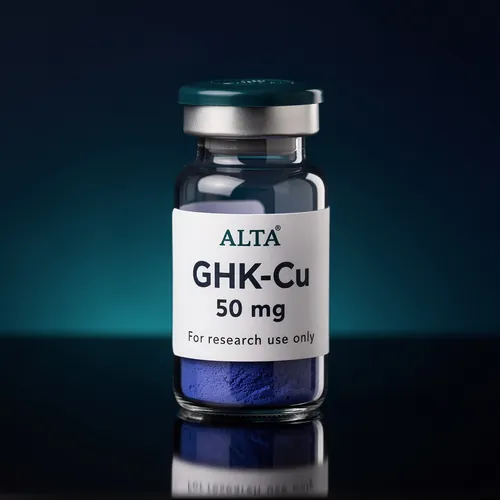
For storage beyond a few weeks, keep sealed vials at minus 20 °C. At that temperature most peptides show no measurable loss of purity over years. For shorter periods, 2 to 8 °C in a laboratory refrigerator is adequate; most lyophilised peptides tolerate refrigerated storage for many months and room temperature for several weeks, which is why a sealed vial can travel by post in an insulated pouch without harm. The exceptions are copper peptides and any sequence containing methionine or cysteine, which we recommend refrigerating on arrival.
Keep vials in their box or in an opaque container. Tryptophan, tyrosine and histidine absorb ultraviolet light and photodegrade. A vial on a lit bench for a day is not a disaster; a vial on a windowsill for a month is.
Do not open a sealed vial you are not about to use. Each opening admits humid air, and a lyophilised cake is hygroscopic. If you need to weigh out part of a vial, do it once, in a dry environment, and reseal the remainder under parafilm.
Reconstituted peptides
Once the peptide is in solution the clock starts. Hydrolysis and oxidation proceed at rates that depend on temperature, pH, concentration and the specific sequence. The practical rules are these.
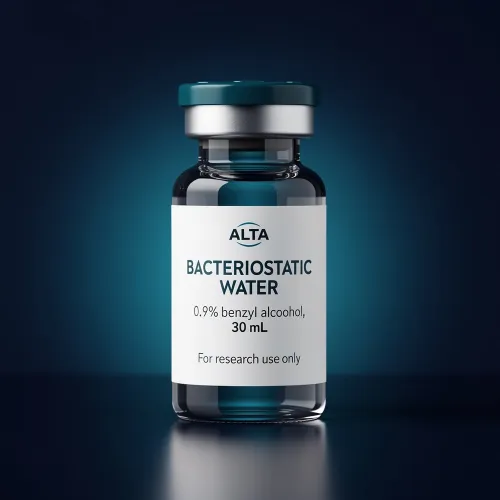
Store reconstituted vials at 2 to 8 °C, protected from light, and plan to use them within four weeks. That window aligns with the 28-day multi-dose life of bacteriostatic water once its stopper has been punctured and is conservative for most sequences. Some peptides remain within specification for longer; some, particularly those prone to aggregation, do not. If a protocol runs longer than four weeks, reconstitute a fresh vial rather than extending the old one.
Do not freeze a reconstituted vial that you intend to keep drawing from. Each freeze-thaw cycle concentrates solutes as ice forms, shifts pH locally and stresses the peptide; three or four cycles can cost several percent of purity. If a solution must be kept for longer than four weeks, split it into single-use aliquots in sterile tubes, freeze them once at minus 20 °C or below, and thaw each aliquot once.
Keep the vial in the body of the refrigerator, not the door. Door temperatures cycle every time it opens and can exceed 8 °C for long enough to matter.
Sequence-specific notes
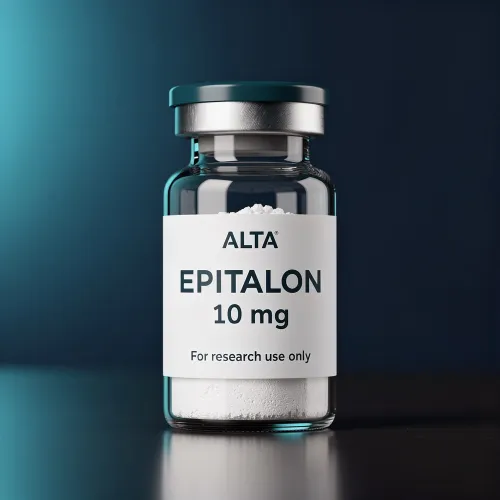
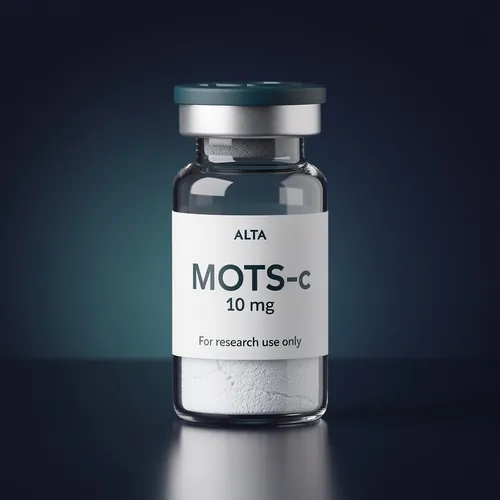
GHK-Cu is stable in solution but the copper complex is light-sensitive; keep it in the dark. MOTS-c and epitalon are short, robust sequences that store well. BPC-157 is notably stable, including in acidic conditions, a property that comes up in its research history. TB-500 is longer and benefits from careful handling to avoid shear. Semax and Selank contain proline-rich motifs that resist enzymatic cleavage but are as susceptible to oxidation as any other peptide, so the general rules apply.
In transit
We ship lyophilised vials in a plain insulated pouch with a cool pack for compounds that specify refrigerated storage. The insulated pouch is not a refrigerator; it slows warming for the 24 to 48 hours the parcel is with Royal Mail. On arrival, move vials to the correct storage temperature within a few hours. A lyophilised peptide that spent a day at room temperature in transit has lost nothing measurable.
Signs of degradation
Lyophilised powder that has collapsed into a sticky film, or that has turned yellow or brown, has absorbed moisture or oxidised. A reconstituted solution that has become cloudy, developed particles, or changed colour should be discarded. A copper peptide solution that has gone from blue to green or brown has lost its copper coordination. For anything ambiguous, a quick HPLC run against the lot's certificate of analysis will show whether the purity has moved.
Summary
Sealed and lyophilised: minus 20 °C for the long term, 2 to 8 °C for months, in the dark. Reconstituted: 2 to 8 °C, in the dark, used within four weeks, never repeatedly frozen. Label everything. That is essentially all of peptide storage, and it is what keeps the purity on the certificate true for the life of the vial. All products on this site are supplied for laboratory research only under our research use policy.