Searching for UK peptides returns dozens of suppliers with near-identical catalogues, similar prices and the same stock photographs, and no obvious way to tell them apart. The differences are real and they matter, because the product is a chemical you cannot verify by looking at it. This guide sets out how to buy research peptides in the UK: what to check about a supplier before ordering, what to check when the parcel arrives, and the legal framework the whole trade sits inside. It is written for people buying laboratory reagents; nothing here is guidance on any other use.
1. Lot-matched certificates of analysis
The single most important check. A serious supplier publishes a certificate for each lot showing identity by mass spectrometry and purity by HPLC, with the lot number on the certificate matching the lot number on the vial you receive. A generic certificate with no lot number, a purity figure with no chromatogram, or a certificate that is years old tells you nothing. Our guide to reading a certificate explains what each line means; ours are on the certificates page.
2. Who did the testing
A certificate from the manufacturer's own quality department is standard and not worthless, but a certificate from an independent laboratory is the higher standard. Look for the laboratory's name on the document. Suppliers who say "third-party tested" without naming the third party are asking you to take their word for it.
3. Where the stock physically is
Many UK-facing peptide suppliers hold no stock: the order is placed with a manufacturer overseas and drop-shipped, which means two to four weeks in transit, customs exposure, and no control over temperature. A supplier with UK stock dispatches the same or next working day by a tracked domestic service. Ask, or look for a stated cut-off time; ours is 1pm Monday to Friday.
4. A real company
Look for a registered company name and number in the footer or terms, a UK address, and a contact route that is answered. Research peptides for sale from a site with no legal entity behind it leave you with no recourse if the material is wrong.
5. How the product is described
This is the check that tells you whether a supplier is operating lawfully, and it cuts against intuition: the better supplier is the one whose product pages say less. A research peptide should be described by sequence, formula, mass, purity, form and storage, with a summary of what the published research covers. A page that describes benefits, gives dosing or protocols, quotes prices "per month" or "per cycle", or shows before-and-after photographs is presenting an unlicensed medicine for human use, which is an offence under the Human Medicines Regulations 2012. Our UK law article sets this out. A supplier prepared to break that rule on the product page is not a supplier you want to rely on for anything else.
6. Research-use terms that are enforced
Every lawful supplier requires an 18-plus confirmation and a research-use declaration. The difference between real and decorative is whether the supplier acts on it: refusing orders where correspondence indicates human use, and declining to answer questions about administration. If a supplier's support channel will happily discuss how to use the product on yourself, the research-use policy is a fig leaf.
7. Vials, seals and packaging
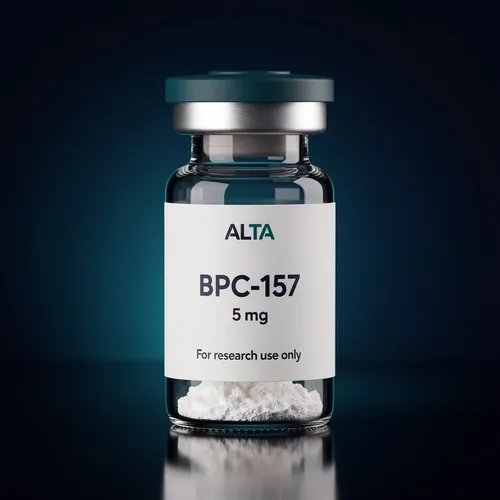
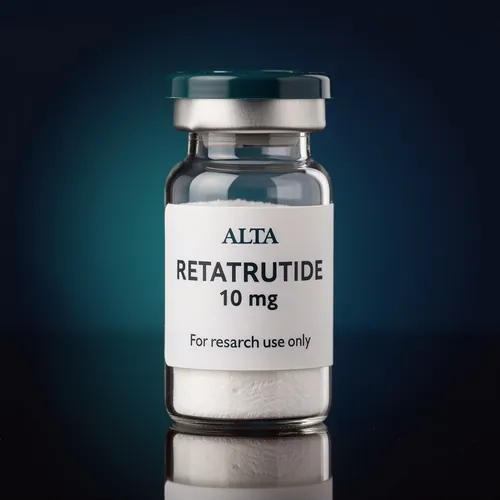
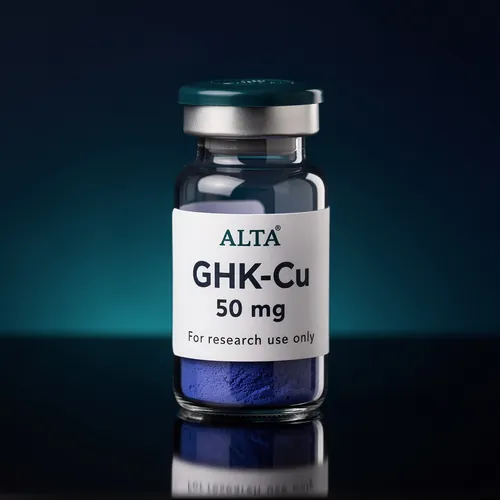
Peptides should arrive as lyophilised powder in a glass vial with an intact aluminium crimp and flip-off cap, labelled with name, quantity, lot number and "for research use only". Loose powder, pre-reconstituted liquid, unlabelled vials or vials with damaged seals should be rejected. Temperature-sensitive compounds should ship with insulation.
8. Payment
Mainstream card processors restrict research chemicals, so suppliers who take cards either use a specialist processor or are one policy review away from losing their account. Bank transfer is the most reliable route and is what many established UK suppliers default to. We offer both; bank transfer orders are held for three days for payment.
9. Price per milligram, not per vial
Compare suppliers on price per milligram at the same purity. A cheaper vial with half the stated mass, or with a purity of 95% rather than 99%, is not cheaper. Every product page here shows the per-milligram price for each size.
10. Reviews, with caution
Reviews of research chemicals are worth little, because the reviewer cannot verify the product any more than you can, and many of the most enthusiastic reviews describe uses the supplier is not permitted to sell for. Weight certificates and company details far above testimonials.
When the parcel arrives
Check the seal and the lot number against the published certificate, move the vial to the stated storage temperature, and keep it sealed until it is needed. Our storage and reconstitution guides cover what happens next. Everything we sell is a laboratory reagent supplied under our research use policy; it is not for human or veterinary use, and we refuse orders that indicate otherwise.