BPC-157 is a synthetic pentadecapeptide, fifteen amino acids long, whose sequence is a fragment of a larger protein found in human gastric juice. The name stands for Body Protection Compound and the number identifies the fragment. It has been the subject of several hundred laboratory papers since the early 1990s, almost all of them from a single research group and almost all of them in rodents, which is the first thing to understand about it. This article answers the question "what is BPC-157" as a matter of chemistry, origin and published research, and sets out its regulatory status. It says nothing about use in people because there is no licensed use and we supply the compound for laboratory research only.
Sequence and chemistry
The sequence is Gly-Glu-Pro-Pro-Pro-Gly-Lys-Pro-Ala-Asp-Asp-Ala-Gly-Leu-Val, molecular formula C62H98N16O22, molecular mass 1419.5 g/mol. Three consecutive prolines near the N-terminus give the chain a rigid, kinked conformation that resists proteolytic cleavage, and the peptide has been reported to remain intact in human gastric juice for more than 24 hours, which is remarkable for a peptide and the property that first drew attention to it. That stability also makes BPC-157 one of the easier peptides to handle in the laboratory: it dissolves readily in water, is stable across a wide pH range, and tolerates room temperature far better than most sequences of its length.
Origin
The compound was identified and developed by Predrag Sikiric and colleagues at the University of Zagreb, who reported it in the early 1990s as a stable gastric pentadecapeptide with cytoprotective activity in models of gastric injury. The group's hypothesis was that the peptide represented part of a native protective system in the gut, and the early work focused on stomach and intestinal lesion models. The research programme then broadened to essentially every tissue that heals: tendon, ligament, muscle, bone, nerve, skin and blood vessels.
What the animal research reports
Across the rodent literature the recurring finding is faster restoration of structure and function after an experimental injury. In a rat Achilles tendon transection model, treated animals showed earlier tendon-to-bone healing and improved biomechanical strength. In medial collateral ligament and quadriceps muscle transection models, similar accelerations were reported, with histology showing more organised collagen and earlier vascularisation. In models of colitis, fistula and short-bowel syndrome the peptide reduced lesion scores. Several papers report reversal of vascular occlusion and improved collateral blood flow, which the authors relate to a proposed mechanism.
That mechanism, as far as it has been characterised, involves the nitric oxide system and angiogenic signalling: BPC-157 has been shown to up-regulate vascular endothelial growth factor receptor 2 (VEGFR2) and to activate downstream pathways in endothelial cells, and to modulate nitric oxide synthase activity. Interaction with the growth hormone receptor in tendon fibroblasts has also been reported. In cell culture it promotes fibroblast migration and tube formation in endothelial cells, both standard in-vitro readouts of a pro-healing, pro-angiogenic activity.
What the research does not show
There are no published randomised controlled trials of BPC-157 in humans. A small number of human studies were registered but none has reported results in the peer-reviewed literature. The animal data come overwhelmingly from one group, and independent replication is thin. Dose-response relationships, pharmacokinetics in humans and long-term safety are unknown. The pro-angiogenic mechanism that underlies the healing findings is also, in principle, a mechanism of concern in the context of tumour biology, and that question has not been studied. These gaps are why the compound remains a research chemical and why any claim about what it does in people is a claim without evidence behind it.
Regulatory status
BPC-157 is not a controlled substance in the UK and has no marketing authorisation anywhere. In the United States the FDA placed it in category 2 of its bulk drug substances list in 2023, meaning it may not be used in compounded medicines because of safety concerns and lack of data. It is on the World Anti-Doping Agency prohibited list under S0 (non-approved substances). In the UK it is lawful to buy and possess as a research reagent, and unlawful to supply for human use under the Human Medicines Regulations 2012; see our guide to peptides and UK law.
In the laboratory
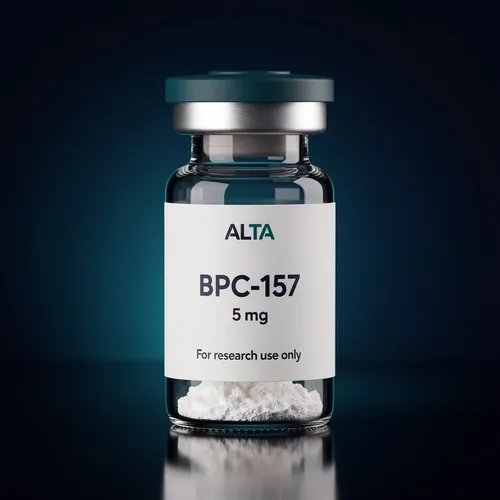
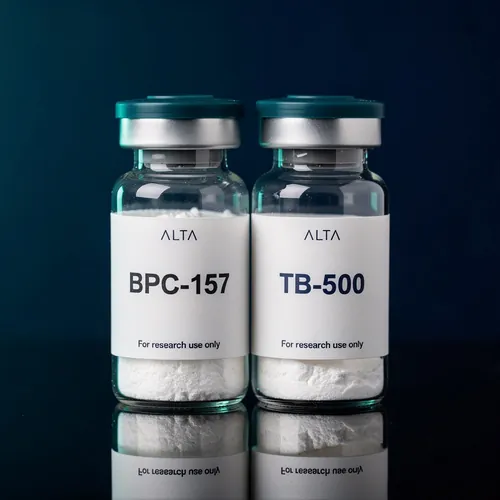
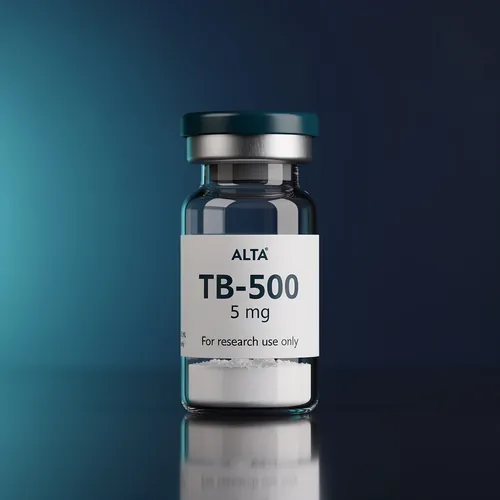
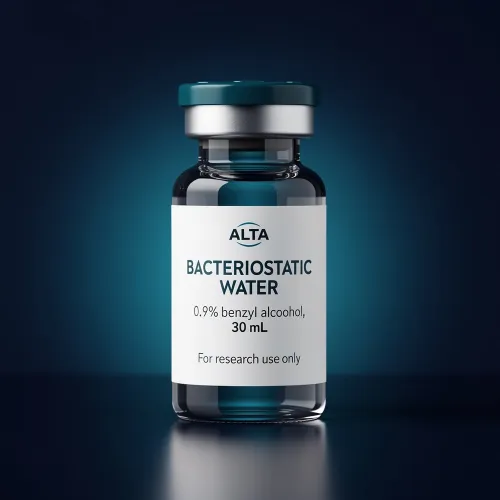
BPC-157 is supplied as a white lyophilised powder in 5 mg sealed vials, purity 99% or better by HPLC, with identity confirmed by mass spectrometry for every lot. It reconstitutes cleanly in bacteriostatic water and is stable in solution at 2 to 8 °C. It is often studied alongside TB-500, a thymosin beta-4 fragment with a different mechanism, and our BPC-157 vs TB-500 article sets out how the two differ. All products are for laboratory research only under our research use policy.