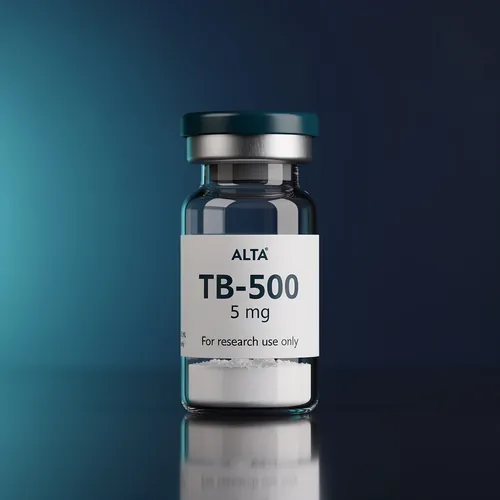
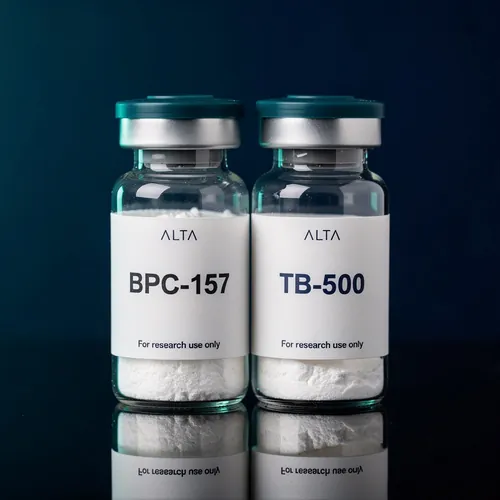
TB-500 is a name that causes confusion, because it is used commercially for two different things: the full 43-amino-acid protein thymosin beta-4, and a short synthetic fragment of it corresponding to the actin-binding region. Our TB-500 is the fragment: the acetylated heptapeptide Ac-Leu-Lys-Lys-Thr-Glu-Thr-Gln, written Ac-LKKTETQ, which is residues 17 to 23 of the parent protein. This article explains what thymosin beta-4 is, why that particular fragment was chosen, what the laboratory and clinical research has looked at, and where the compound stands legally. It is a summary of published science for research purposes, not guidance on use.
Thymosin beta-4
Thymosin beta-4 (Tβ4) is a small, highly conserved protein present in almost every cell type in the body, at particularly high concentration in platelets and white blood cells. Despite the name it has nothing to do with the thymus in function; it was simply first isolated from thymic extracts in the 1960s. Its main job inside the cell is to sequester monomeric actin, holding a reserve of G-actin that the cell can release to build filaments when it needs to move or change shape. Because cell migration is the first step of wound repair, Tβ4 has been studied extensively as a wound-healing protein, and it is also released from platelets into wounds at high concentration.
The LKKTETQ fragment
Mapping studies in the 1990s identified the sequence LKKTETQ as the minimal actin-binding motif of thymosin beta-4. Synthetic peptides containing this motif reproduced the actin-sequestering activity of the whole protein and, in cell assays, some of its effects on migration. The commercial fragment is N-terminally acetylated, which mirrors the native protein (Tβ4 is acetylated in vivo) and improves stability against aminopeptidases. Molecular formula C38H68N10O14, mass 889.0 g/mol. It is water-soluble and, being short, robust in handling, although we recommend adding diluent gently as with any peptide.
What the research reports
The in-vitro literature on thymosin beta-4 and its fragment centres on three readouts: endothelial and keratinocyte migration in scratch-wound assays, tube formation by endothelial cells as a proxy for angiogenesis, and reduced inflammatory cytokine expression. In animal models, full-length Tβ4 has been reported to accelerate dermal wound closure in rats and diabetic mice, to improve corneal wound healing, and, in a widely cited series of mouse studies, to promote cardiomyocyte survival and coronary vessel growth after experimental myocardial infarction. The proposed mechanisms include actin regulation, up-regulation of matrix metalloproteinases that clear the wound bed, and effects on inflammatory signalling.
The fragment has been studied less than the parent protein. It reproduces the actin-binding activity and some migration effects; whether it reproduces the full range of Tβ4's reported activities, several of which appear to depend on other regions of the protein, is not established. Anyone reading "TB-500" research should check whether the paper used the protein or the peptide.
Clinical development
Thymosin beta-4 has been in human trials, which distinguishes it from most peptides in this category. RegeneRx Biopharmaceuticals developed it as RGN-259, an eye drop formulation, which reached phase 3 for dry eye disease and neurotrophic keratopathy; and as RGN-352, an injectable studied in a phase 2 trial after heart attack that was halted on manufacturing rather than safety grounds. None of these programmes has led to a licensed product anywhere, and none used the LKKTETQ fragment.
Regulatory and anti-doping status
TB-500 is not a controlled substance in the UK. It has no marketing authorisation in any country and is lawful to buy and possess as a research reagent. It is prohibited by WADA under S2 (peptide hormones, growth factors and related substances), and it has a history in equine sport: several racing authorities banned it after it appeared in horses in the early 2010s. Supplying it for human or veterinary use in the UK is an offence under the Human Medicines Regulations; see peptides and UK law.
In the laboratory
We supply TB-500 in 5 mg sealed vials at 99% or better HPLC purity with per-lot mass spectrometry. It is frequently studied in combination with BPC-157 because the two act through different mechanisms; that pairing is what the Wolverine stack is, and our comparison article goes through the differences. Research use only, under our research use policy.