Peptides for skin are the one corner of peptide science that reached the high street: copper peptides, Matrixyl and Argireline have been on serum labels for twenty years. Peptides for hair growth are a smaller but fast-growing search. This article is a round-up of what has actually been studied, organised by the four classes cosmetic science uses, with what each body of research measured and how strong it is. It ends with the difference between a cosmetic ingredient and a research-grade reagent, because the two are constantly confused. It describes the literature; it is not a recommendation to use anything.
- Cosmetic science groups skin peptides into four types: signal peptides, carrier peptides, neurotransmitter-inhibiting peptides and enzyme-inhibiting peptides.
- GHK-Cu is the most studied: fibroblast collagen synthesis in culture, skin measurements in small volunteer studies, wound models in animals, and hair follicle models.
- Palmitoyl pentapeptide-4 (Matrixyl), acetyl hexapeptide-8 (Argireline) and palmitoyl tripeptide-1 are cosmetic ingredients with industry-funded skin studies.
- Most skin peptide research is topical and cosmetic in scale; controlled trials are small and industry-funded. Hair research is largely in animal and ex vivo follicle models.
- Research-grade vials supply the pure peptide for a laboratory to formulate and test; they are not skincare products.
The four classes
Cosmetic chemists group skin peptides by proposed mechanism. Signal peptides are fragments of matrix proteins that, in culture, prompt fibroblasts to make more collagen, elastin and other matrix components. Carrier peptides deliver a trace metal, copper in every practical case, to the skin. Neurotransmitter-inhibiting peptides mimic the action of botulinum toxin on the release machinery in nerve endings, in a much weaker form. Enzyme-inhibiting peptides block enzymes that degrade matrix proteins. The classification is useful because it says what each study was able to measure.
GHK-Cu: the carrier peptide
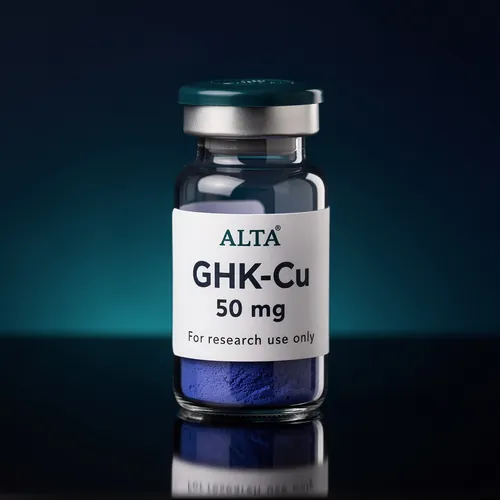
Glycine-histidine-lysine complexed with copper is the most studied skin peptide and the only one that spans all the research formats. In cultured fibroblasts it increases collagen, elastin and glycosaminoglycan synthesis and the expression of matrix-remodelling enzymes. In animal wound models, applied as a gel or dressing, it accelerates closure and improves the quality of the repaired tissue. In small volunteer studies, industry-funded and cosmetic in framing, topical GHK-Cu improved instrument measures of skin thickness, elasticity and fine lines over twelve weeks. In hair, mouse studies and ex vivo human follicle cultures report enlarged follicles and increased hair shaft elongation, which is the basis of the hair-growth interest and of the copper peptide shampoos that followed. Our GHK-Cu explainer and topical versus injectable article go into the detail, and the product page gives the specification of the research vial.
Signal peptides: Matrixyl and its relatives
Palmitoyl pentapeptide-4, marketed as Matrixyl, is a five-residue fragment of type I collagen with a palmitoyl chain added to help it cross the stratum corneum. In fibroblast culture it stimulates collagen and fibronectin production; in a handful of small volunteer studies it reduced wrinkle depth measured by profilometry. Palmitoyl tripeptide-1 and palmitoyl tetrapeptide-7, sold together as Matrixyl 3000, have similar but thinner evidence. These are cosmetic ingredients through and through: the concentrations used are low, the studies are short, industry-funded and measure surface properties, and there is no injectable literature because there is no reason for one. They are not research peptides in the sense used on this site and we do not sell them.
Neurotransmitter-inhibiting peptides: Argireline
Acetyl hexapeptide-8, marketed as Argireline, mimics the N-terminal end of SNAP-25, a protein in the machinery that releases acetylcholine at the neuromuscular junction, and in cell models competes with it. The claim is a milder, topical version of what botulinum toxin does by injection. The human evidence is a few small studies reporting reduced wrinkle depth with twice-daily application; whether a peptide applied to the skin surface reaches the muscle in any amount is unresolved. It is a cosmetic ingredient and, again, not a research reagent.
Other peptides that appear in skin research
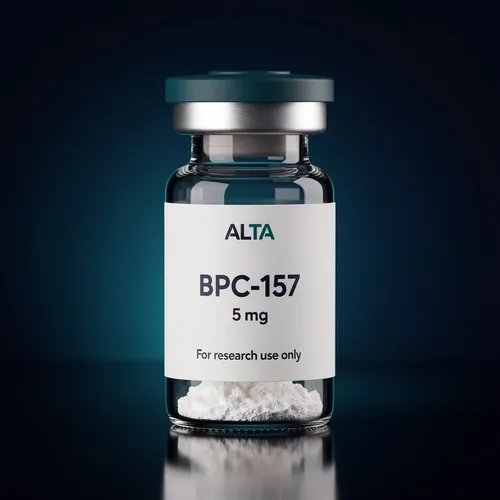
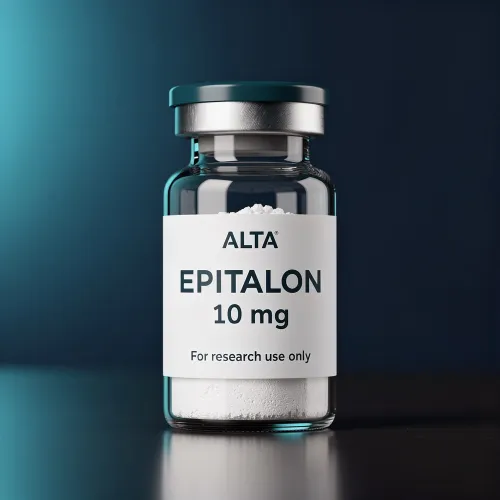
Several compounds sold as research reagents have skin or wound literature that is not cosmetic in origin. BPC-157 has rat skin-wound closure data alongside its tendon work, see our explainer. TB-500, the thymosin beta-4 fragment, was studied for dermal wound healing before anything else; its actin-regulating mechanism is about cell migration into a wound. Epitalon, the tetrapeptide from the pineal peptide epithalamin, has cell-culture work on fibroblast proliferation in its Russian literature, summarised in our MOTS-c and epitalon article. These are wound-biology and ageing-biology studies, not skincare studies, and the distinction is the same one as between a research vial and a serum.
How strong is the evidence?
Honestly, thin at the human end. The cell-culture work is reproducible and the animal wound models are solid, but the human skin studies are small, short, run or funded by the ingredient's maker, and measure instrument readings rather than anything a dermatologist would call an outcome. Hair research has no controlled human trial for any peptide. That is a fair description of a field that has been driven by cosmetics rather than medicine, and it is why product claims in this area outrun the data by a wide margin.
Cosmetic ingredient versus research reagent
A serum is a finished product regulated under cosmetics law: the peptide is one ingredient among many, at a concentration the label rarely states, with a safety assessment but no certificate of analysis for the peptide itself. A research vial is the pure compound, 50 mg of GHK-Cu for example, with purity and identity on a lot-matched certificate, supplied for a laboratory to formulate and test as its design requires. The research literature above was generated from reagents of the second kind. ALTA PEPTIDES sells reagents only, for laboratory research under our research use policy, and gives no guidance on formulating or using anything on people.
Questions people ask
Which peptide is most studied for skin?
GHK-Cu, by a wide margin: it has cell-culture, animal wound, small human skin and hair follicle studies going back to the 1980s.
Are peptides for hair growth backed by research?
GHK-Cu has mouse and ex vivo human follicle studies reporting increased follicle size and hair shaft growth. There are no large controlled human trials of any peptide for hair.
What is the difference between a cosmetic peptide and a research peptide?
A cosmetic peptide is formulated into a finished product at a low, usually undisclosed concentration and sold under cosmetics law. A research peptide is the pure compound in a certified vial, supplied for laboratory work.
Does ALTA PEPTIDES sell skincare?
No. We sell laboratory reagents, including GHK-Cu, for research use only, and give no guidance on formulating or using anything on people.