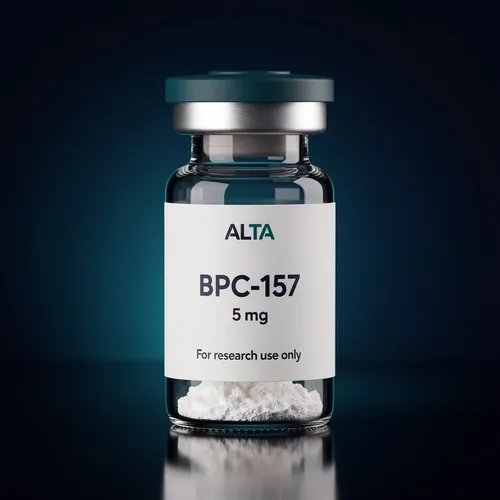
Insulin syringes are the standard tool for measuring sub-millilitre volumes of diluent when reconstituting a research peptide, for the simple reason that they are the most precise cheap disposable syringe made. They come in a bewildering range of sizes and gauges, and the packaging assumes you already know what U-100 means. This article explains insulin syringe sizes, gauges and scales as they apply to laboratory handling, and how to store and dispose of them. It is equipment information for research use only; it is not guidance on injecting anything into anyone.
Why an insulin syringe?
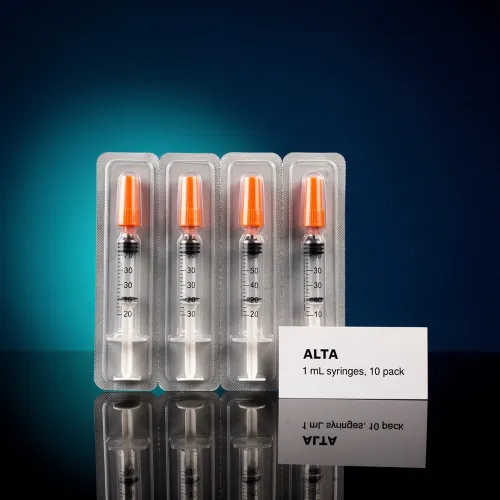
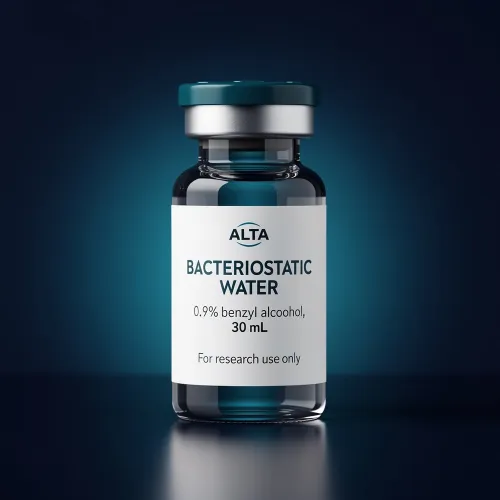
An ordinary 1 mL syringe is graduated in 0.1 mL steps with a separate needle attached by a Luer lock. An insulin syringe is graduated in 0.01 mL steps, has a fine needle permanently fixed to the barrel, and has almost no dead space between the plunger tip and the needle, so the volume drawn is the volume delivered. For drawing 0.5 mL or 1 mL of bacteriostatic water into a peptide vial, or for transferring a precise volume of reconstituted solution between laboratory vessels, that precision is exactly what is needed.
Barrel size
Insulin syringes come in 0.3 mL, 0.5 mL and 1 mL barrels. The smaller barrels have finer graduations and are easier to read at low volumes; the 1 mL barrel covers the full range of reconstitution volumes in a single draw. For peptide work the 1 mL syringe is the general-purpose choice, which is why it is the size we stock. Larger volumes, for example 2 mL or 3 mL of diluent for a large vial, are better measured with a standard 3 mL syringe or a calibrated pipette.
The U-100 scale
U-100 is a labelling convention inherited from insulin, which is supplied at 100 units per millilitre. A U-100 syringe is graduated in those units: 100 units marks equals 1 mL, 50 units equals 0.5 mL, and each unit mark is 0.01 mL. The units have nothing to do with the peptide in your vial; they are simply a scale, and for laboratory purposes you read the syringe in millilitres by dividing the unit reading by 100. Our calculator reports volumes in both millilitres and U-100 syringe units so the two scales can be read against each other. U-40 syringes also exist for veterinary insulin; they have a different scale and should not be mixed with U-100 in a laboratory, so check the packet.
Needle gauge and length
Gauge describes needle diameter, and the scale runs backwards: a higher number is a thinner needle. Insulin syringe needles are typically 28G to 31G, with 29G, 30G and 31G the most common; a 31G insulin syringe needle is about 0.26 mm across. Thinner needles pierce a rubber stopper with less coring and less damage to the stopper on repeated punctures, and draw more slowly. Length is usually 6 mm, 8 mm or 12.7 mm (5/16 inch or 1/2 inch). For reaching the bottom of a 3 mL vial to draw solution, 8 mm is a good general length. The syringes we stock are 1 mL, 31G, 8 mm, in packs of 10.
Handling in the laboratory
Each syringe is sterile in an individual blister or wrapper and is single-use: once the needle has punctured anything it is no longer sterile and the fine tip is blunted. Wipe the stopper with an alcohol swab before every puncture. Draw diluent slowly to avoid pulling air, and expel any air bubble by holding the syringe needle-up and tapping the barrel before adjusting to the volume needed. Never recap a used needle by hand; if it must be recapped, use a one-handed scoop technique. Never share syringes between vials.
Disposal in the UK
Used syringes are sharps and must not go in domestic waste. Use a purpose-made sharps bin with a locking lid; small 0.2 to 1 litre bins are inexpensive. Full bins are disposed of through a licensed clinical waste contractor, a pharmacy sharps-return scheme where available, or the local council's clinical waste collection, which most UK councils offer on request. Laboratories with a waste contract will already have this covered.
Buying insulin syringes in the UK
Insulin syringes are freely sold in the UK without prescription. Look for CE or UKCA marking, a stated gauge and length, individual sterile packaging with an expiry date, and a UK seller who dispatches from stock. Ours are supplied as laboratory consumables for reconstitution and transfer under our research use policy, alongside the diluent and swabs that complete the kit.