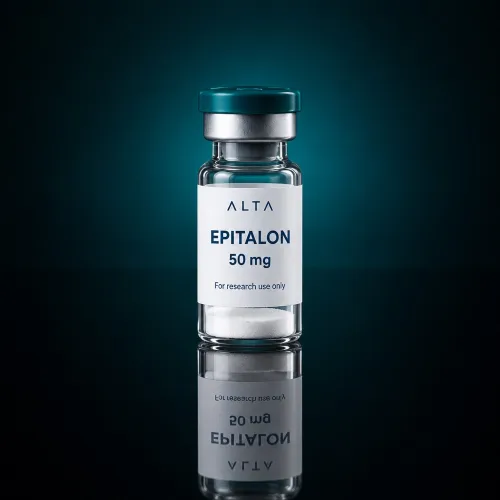
 No. 008
No. 007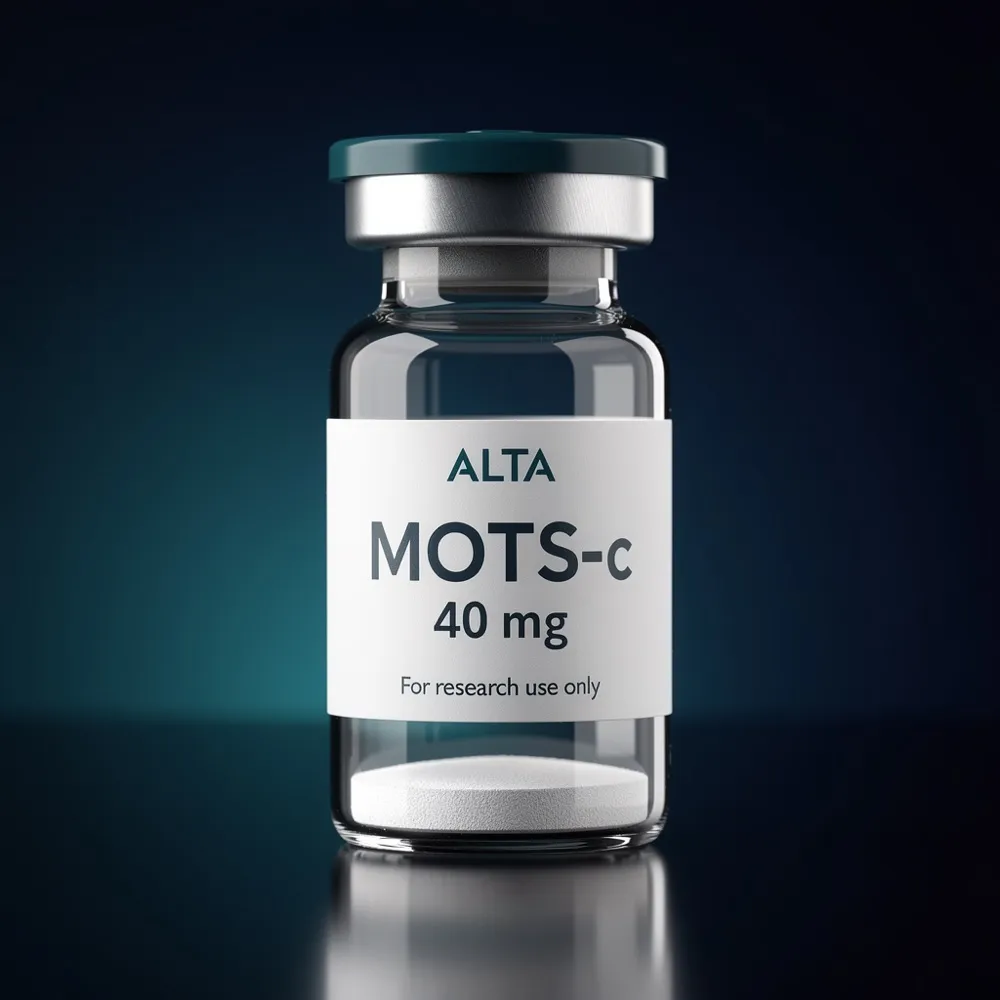
FormatLyophilised vial
AreaLongevity & Cellular
DispatchToday before 1pm
Longevity & Cellular · Lyophilised vialIn stock
MOTS-c mitochondrial peptide (40 mg vials, MS40)
Mitochondrial open reading frame of the 12S rRNA-c
Lot 10377 · HPLC 99.83%
A 16-amino-acid peptide encoded in mitochondrial DNA, studied as a metabolic regulator acting through AMPK.
Size
£74.99£1.87/mg
1
In stock, ships todayLot certificate published · HPLC 99.83%Free UK delivery over £75Discreet, unmarked box
- VISA
- Mastercard
- AMEX
- Apple Pay
- Google Pay
- Crypto
Add reconstitution supplies
- Dispatched today if ordered before 1pm, Monday to Friday
- Royal Mail Tracked 48 £4.95, free over £75 · Tracked 24 £6.50
- Plain packaging, 14-day returns on sealed items
Certificate of analysisThird-party laboratory report
- Lot
- 10377
- Purity (HPLC)
- 99.83%
- Report date
- 2026-07-08
- Independent test
- Pending
Not licensed as a medicine in any jurisdiction.
§ 01
Data sheet · No. 007Specification
- Compound
- MOTS-c
- Also known as
- Mitochondrial open reading frame of the 12S rRNA-c
- Sequence
- Met-Arg-Trp-Gln-Glu-Met-Gly-Tyr-Ile-Phe-Tyr-Pro-Arg-Lys-Leu-Arg
- Formula
- C101H152N28O22S2
- Molecular weight
- 2174.6 g/mol
- CAS
- 1627580-64-6
- Purity
- ≥ 99% (HPLC)
- Form
- Lyophilised powder, 3 mL glass vial, sealed, 40 mg per vial
- Storage
- Sealed vial: -20 °C, protected from light. Reconstituted: 2 to 8 °C, use within 2 weeks.
§ 02
About MOTS-c
In brief: ALTA PEPTIDES supplies MOTS-c (Mitochondrial open reading frame of the 12S rRNA-c) as a 40 mg lyophilised vial for £74.99 (£1.87/mg), with the certificate of analysis for lot 10377 published, held in UK stock and dispatched the same working day before 1pm. Supplied for laboratory research only, not for human consumption.
New to MOTS-c? Read our guide, What is MOTS-c? The peptide made by your mitochondria, and what the research shows, for what it is, what the research covers and how it is handled.
What is MOTS-c?
MOTS-c (mitochondrial open reading frame of the 12S rRNA type-c) is a 16-amino-acid peptide encoded not in the nuclear genome but in mitochondrial DNA, discovered in 2015 by Changhan Lee and Pinchas Cohen's group at USC. It belongs to a small family of mitochondrial-derived peptides that act as signalling molecules between mitochondria and the nucleus. We supply the synthetic peptide at 99%+ HPLC purity in 40 mg sealed vials.
The MOTS-c peptide is supplied as a MOTS-c 40mg vial, the size that gives the best price per milligram for extended in-vitro work.
What the research covers
In mice, MOTS-c administration improved insulin sensitivity, prevented diet-induced obesity and age-related insulin resistance, and increased physical capacity, with effects mediated by AMPK activation and regulation of the folate and methionine cycles. Circulating MOTS-c falls with age in humans, and levels rise acutely after exercise. A synthetic analogue (CB4211) completed a phase 1 trial in obesity and fatty liver. MOTS-c itself has no controlled human efficacy data and is not licensed anywhere.
Buying MOTS-c in the UK
Not a controlled substance and not a licensed medicine; sold as a research chemical for laboratory use only. UK stock, certificate of analysis published per lot, same-day dispatch before 1pm. MOTS-c is less stable in solution than most peptides in our range; reconstituted material should be used within two weeks.
Names and spellings
MOTS-c, MOTS c and MOTSc are the same peptide; the c denotes the type-c open reading frame. A motsc peptide listing anywhere refers to this 16-residue sequence, and the MOTS-c 40mg vial here is the size most laboratories standardise on.
Some suppliers abbreviate a 40 mg MOTS-c vial as MS40 (MS for MOTS-c, 40 for the milligrams). If you have seen an MS40 peptide on a vial cap or price list, it refers to the same peptide sold on this page: MOTS-c, 40 mg per vial. MS40 is a label code, not a different compound or formulation.
MOTS-c price (UK)
| Vial | Price | Cost per mg | Availability |
|---|---|---|---|
| MOTS-c 40mg | £74.99 | £1.87/mg | In stock, ships today |
Prices include VAT. Shipping is £4.95 by Royal Mail Tracked 48, free on orders over £75, and sealed items can be returned within 14 days. Ships from UK stock with the lot certificate for the vial you receive.
Quality and testing
The certificate of analysis for lot 10377 of MOTS-c is published on our certificates page and linked above. It is a third-party laboratory report (ILS Laboratories, San Diego, ISO/IEC 17025) obtained by our supplier on its own vials from the lot, reporting identity by HPLC retention time against a reference and purity by HPLC, with a purity result of 99.83%. ALTA's own independent third-party test of the finished vials from this lot is pending and will be published on the same row when it arrives. The lot number on the vial label matches the certificate. Note: Supplier-provided report on a 10 mg vial from this lot. ALTA sells the 40 mg vial from the same lot; our own test of the 40 mg vial is pending. Specification: ≥ 99% (HPLC), supplied as lyophilised powder, 3 ml glass vial, sealed, 40 mg per vial.
Reconstitution and handling
MOTS-c arrives as a lyophilised cake under an aluminium crimp seal. Let the vial reach room temperature before opening so that condensation does not form on the powder. Swab the stopper with an alcohol swab, draw the chosen volume of bacteriostatic water (our bacteriostatic water guide explains why it is used rather than sterile water) with a sterile syringe, and add it slowly down the inside wall of the vial rather than onto the powder. Swirl gently until clear; never shake, which can denature the peptide. Label the vial with the date and concentration. The peptide calculator converts vial amount and diluent volume into concentration, millilitres and U-100 syringe units for any target amount. Sealed vial: -20 °C, protected from light. Reconstituted: 2 to 8 °C, use within 2 weeks.
Lot traceability
Every MOTS-c vial carries a printed lot number and expiry. The same lot number appears on the certificate of analysis for that lot on our certificates page, which names who issued it (the manufacturer's QC laboratory for a batch certificate, or the outside laboratory for a third-party report) so it can be checked directly. ALTA's own independent test of each lot is published on the same row as it arrives. If the number on your vial does not match a certificate on our site, contact support before using it. Certificates are kept online for the life of the product plus two years.
Related products
Epitalon, NAD+ & B12 Pen, BPC-157, and everything else in Longevity & Cellular or the full range. Reconstitution supplies: bacteriostatic water, insulin syringes and alcohol swabs.
Related reading in the Journal
- What is MOTS-c? The peptide made by your mitochondria, and what the research showsMOTS-c is a 16-amino-acid peptide made from a gene inside mitochondria, the cell's power plants. In mice it helps muscle use glucose, protects against diet-induced weight gain and improves physical performance in old age; in people, exercise raises it. The only human trial was of a different analogue, and it was dropped. What it is, what the research shows and where it stands.
- Apitegromab and bodybuilding: can a myostatin blocker really build muscle?Myostatin is the body's brake on muscle, and animals born without it are famously huge. That is why bodybuilders are curious about apitegromab, the first approved drug that blocks it. But in people, myostatin blockers have added only modest muscle, rarely more strength, and none has ever been tested in healthy or trained adults. What the evidence really shows, the risks, and why it is banned in sport.
- What is epitalon? The four-amino-acid ageing peptide and what the evidence really showsEpitalon (epithalon) is a four-amino-acid peptide, Ala-Glu-Asp-Gly, designed in St Petersburg from a cow pineal-gland extract. It switched on telomerase and lengthened telomeres in human cells, and modestly extended the lives of the longest-lived mice. Almost all of that work comes from one group; a 2025 UK study has now repeated the telomere finding in cells. What it is, what the evidence shows and its limits.
- NAD+ injections in the UK: pens, vials and what is in themNAD+ is a coenzyme, not a peptide, and the UK market sells it as pre-filled pens, lyophilised vials and clinic infusions. What each format contains, how NAD+ relates to NMN and NR, and where the law sits.
- GLP-1 receptor agonists explained: incretins, the peptides from exenatide to retatrutide, and where each standsThe incretin story from a lizard's saliva to a triple agonist: what GLP-1 and GIP do, how the peptides were engineered to last a week, and which are licensed medicines versus research compounds.
Handling and buying guides: How to reconstitute peptides: a laboratory guide, How to store peptides, and how long lyophilised peptides last at room temperature, How to read a peptide certificate of analysis.
Handling and storage
Sealed vial: -20 °C, protected from light. Reconstituted: 2 to 8 °C, use within 2 weeks. Keep sealed until use. Allow the vial to reach room temperature before opening to avoid condensation on the powder. Reconstitute with bacteriostatic water added slowly down the wall of the vial; do not shake. Our calculator covers the arithmetic.
For laboratory research use only. Not for human or veterinary use, not for diagnostic or therapeutic use, not a medicine or a supplement. Sold to researchers aged 18 and over. Nothing on this page is a recommendation for any use of this compound.
§ 03
Questions
What is MOTS-c used for in research?
Metabolic and ageing models: insulin sensitivity, exercise capacity, mitochondrial signalling and AMPK activation, mostly in mice and cell culture. Supplied here for laboratory research only.
Why is it called a mitochondrial peptide?
Because its gene sits in mitochondrial DNA rather than the nuclear genome. It is one of a handful of such peptides, alongside humanin and the SHLPs.
What is MS40?
MS40 is a shorthand some suppliers put on 40 mg MOTS-c vials. It is the same peptide as this listing: MOTS-c, 40 mg per lyophilised vial. More background in our MOTS-c guide.
How should MOTS-c be stored?
Sealed vials at -20 °C away from light. Reconstituted at 2 to 8 °C and used within two weeks, as it degrades faster in solution than many peptides.
Is MOTS-c legal in the UK?
Yes to buy and possess. Unlicensed, research use only.
Is each lot tested?
Yes. The certificate for lot 10377 is published on the certificates page and linked from this page: a third-party laboratory report obtained by our supplier on its own vials from the lot, reporting identity by HPLC retention time against a reference and purity by HPLC (purity 99.83%). ALTA's own independent third-party test of the finished vials is pending and will be published on the same row when it arrives.
§ 04
See all →More in Longevity & Cellular
No. 008
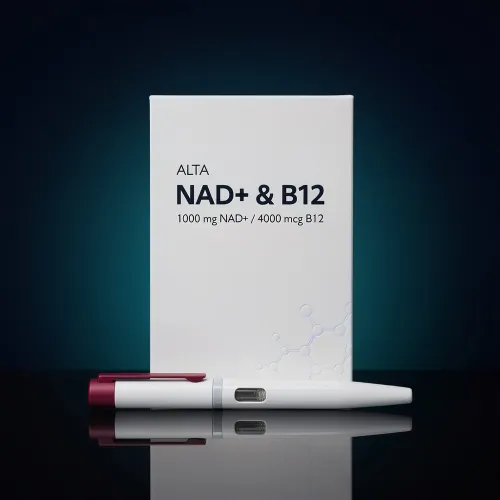 NewNo. 009
NAD+ & B12 Pen
Synedica pre-filled pen: 1,000 mg NAD+ with 4,000 mcg vitamin B12
- Size
- 1,000 mg + 4,000 mcg
- HPLC
- n/a
- Lot
- on request
£119.99