In this article17 sections
A 28-amino-acid immune-signalling peptide, isolated from calf thymus in 1977 and sold as the medicine thymalfasin, brand name Zadaxin. It is approved in more than 30 countries, mostly for hepatitis B, but not in the UK, the US or Japan. Its one large trial, in 1,106 adults with sepsis, found no survival benefit. It is unrelated to thymosin beta-4, the protein behind TB-500.
Thymosin alpha-1 is unusual among research peptides: it is an actual approved medicine somewhere. Sold as Zadaxin for decades, mostly in China, it has been through more human trials than almost anything else in this category. So the question is not "is there any evidence" but "what did it find", and the answer is more sobering than the claimed thymosin alpha-1 benefits suggest.
- Thymosin alpha-1 is an N-terminally acetylated peptide of 28 amino acids, first isolated from thymosin fraction 5 of calf thymus in 1977. The synthesised version is thymalfasin, sold as Zadaxin.
- It is cut from a larger precursor protein called prothymosin alpha, and shares no sequence, structure or receptor with thymosin beta-4 despite both carrying the thymosin name.
- The FDA's 2024 review states that its immune effects are mediated at least in part through Toll-like receptor 9 (TLR9) on dendritic cells and lymphoid progenitor cells.
- SciClone Pharmaceuticals, which markets Zadaxin, told the US Securities and Exchange Commission that it was approved in over 30 countries, mostly for hepatitis B and C and as a vaccine or chemotherapy adjuvant; in China the approved uses are hepatitis B and vaccine adjuvant.
- The FDA states that thymosin alpha-1 is not approved in the United States, Japan or Europe except Italy, and that it could not independently verify the company's claims of approval in all the countries listed.
- TESTS, a randomised, placebo-controlled trial in 1,106 adults with sepsis at 22 centres in China, reported 28-day deaths of 23.4% with thymosin alpha-1 and 24.1% with placebo (hazard ratio 0.99). BMJ, 15 January 2025.
- In healthy men it was absorbed within about two hours of a subcutaneous injection, with a serum half-life of roughly two hours (Rost et al., 1999).
- Of four meta-analyses of thymosin alpha-1 in COVID-19 reviewed by the FDA in 2024, three found no reduction in mortality.
What is thymosin alpha-1?
In shortA 28-amino-acid immune-signalling peptide from the thymus, sold as the medicine thymalfasin.
Acetylated at one end. Cut from a larger protein, prothymosin alpha.
Purified from thymosin fraction 5, a calf thymus extract.
Sold as Zadaxin by SciClone Pharmaceuticals. Researchers write it Ta1.
After a subcutaneous injection in healthy men (Rost et al., 1999).
FDA Pharmacy Compounding Advisory Committee briefing on thymosin alpha-1, 4 December 2024.
Thymosin alpha-1 is a short protein fragment: 28 amino acids, with an acetyl group capping one end. It was first isolated in 1977 from thymosin fraction 5, a crude extract of calf thymus. The thymus is the gland where T cells, the immune system's co-ordinators, learn to tell friend from foe, so a signalling molecule found there was an obvious candidate for thymosin alpha-1 immune research.
The body does not make it directly: it is cut from a precursor protein called prothymosin alpha. The synthetic copy, with an identical sequence, is called thymalfasin, and SciClone Pharmaceuticals sells it as Zadaxin. Researchers abbreviate it Ta1. Searches for thymosin alpha 1 and thymosin alpha-1 mean the same thing.
How does thymosin alpha-1 work?
In shortIt changes how immune cells behave, acting at least partly through Toll-like receptor 9.
- 01Thymosin alpha-1
A 28-residue peptide, cut from prothymosin alpha
- 02TLR9
Engages Toll-like receptor 9 on dendritic and lymphoid progenitor cells
- 03Dendritic cells
The messengers that present threats to T cells are altered
- 04T cells
Maturation and the inflammatory or regulatory balance shift
Mechanism as stated in the FDA's December 2024 review. The downstream steps are proposed, not demonstrated in people.
Assessment based on the FDA review and the trials described in this article.
It is a modulator, not a weapon: it does not kill viruses or bacteria, it changes how immune cells behave. The clearest mechanism statement comes from the FDA's 2024 technical review: its immunomodulatory properties are mediated at least in part by interactions with Toll-like receptor 9 (TLR9) on dendritic cells and lymphoid progenitor cells. Toll-like receptors are the immune system's pattern detectors, and TLR9 senses bacterial and viral DNA; dendritic cells present threats to T cells. Acting at that junction is how one small peptide could, in principle, nudge T-cell maturation and shift the inflammatory and regulatory balance.
In animal and cell studies it slowed tumour growth, suppressed viral infections and reduced sepsis severity in rodents, and raised antibody levels after some vaccines in mice. Those are animal findings. In healthy men, after a subcutaneous injection, it was absorbed within about two hours and had a serum half-life of roughly two hours, with no sign of accumulation over five days.
Where is thymosin alpha-1 approved?
In shortIn more than 30 countries, mostly for hepatitis B. Not the UK, the US or Japan.
In a long list of countries, but not the ones most readers live in. SciClone has told the US Securities and Exchange Commission that Zadaxin was approved in over 30 countries, primarily in China, the Pacific Rim, Latin America, Eastern Europe and the Middle East, for hepatitis B and C and as a vaccine or chemotherapy adjuvant. In China, the largest market by a wide margin, the approved uses are hepatitis B and vaccine adjuvant.
The gaps matter. The FDA states that it is not approved in the United States, Japan or Europe except Italy, that it is not recognised in the European or Japanese pharmacopoeias, and that the agency could not verify the company's claims of approval in all the countries listed. It also noted that US websites were advertising compounded thymosin alpha-1 as "FDA-approved", when the FDA has approved no product containing it. On thymosin alpha-1 side effects, the FDA's review found the most common reported were local: irritation, redness and discomfort where it was given.
What did the sepsis trials show?
In shortThe large 2025 trial in 1,106 adults found no survival difference against placebo.
28-day mortality. ETASS: Wu et al., Critical Care 2013. TESTS: BMJ, 15 January 2025, hazard ratio 0.99 (95% CI 0.77 to 1.27, p = 0.93). The larger, properly blinded trial found no difference.
Tap a condition thymosin alpha-1 has been studied in
The best-studied use. ETASS (361 patients, single-blind) reported 28-day mortality of 26% against 35% in controls, and a 2013 meta-analysis of ten small trials, 530 patients in all, suggested a 41% relative reduction. TESTS then randomised 1,106 adults at 22 centres in China, double-blind and placebo-controlled: 23.4% died within 28 days on thymosin alpha-1 against 24.1% on placebo, hazard ratio 0.99. The authors concluded there was no clear evidence of benefit.
Where most of the world's approvals sit, and the evidence is mixed. The one randomised, double-blind, placebo-controlled trial of the peptide alone found undetectable hepatitis B DNA in 20% of treated patients against 21% on placebo six months after treatment ended. Trials adding it to pegylated interferon or to entecavir found differences of a few percentage points that were not statistically significant. The FDA concluded there is insufficient evidence to determine effectiveness.
A randomised, double-blind, placebo-controlled pilot study found no patient cleared hepatitis C RNA. A later randomised, double-blind, placebo-controlled trial adding the peptide to pegylated interferon and ribavirin reported sustained virologic response in 12.7% against 10.5%, and its authors stated the addition did not increase the on-treatment viral response. Modern direct-acting antivirals cure more than 90%.
Used widely in China early in the pandemic, producing a large retrospective literature. The FDA reviewed four meta-analyses: three found no decrease in mortality and the fourth found lower mortality but no reduction in mechanical ventilation or length of stay. Guidelines from the NIH, the WHO and the Infectious Diseases Society of America do not discuss it.
The largest study is an open-label randomised trial in 488 patients with stage IV melanoma, published in 2010, adding the peptide to dacarbazine with or without interferon alpha. Best overall response was 4.1% in the control arm and 6.1% to 12.1% in the thymosin arms, and no arm differed significantly. Liver and lung cancer studies were small, mostly single-centre, and used comparators that are no longer standard care.
Five studies, in older adults and in people on dialysis, gave it after or around an influenza vaccine. The FDA found most did not use appropriate measures of immune response, had exploratory designs without prespecified endpoints, and lacked adequate control groups, and concluded there was not enough evidence to reach any conclusion on effectiveness as an adjuvant.
Interactive. All figures from the FDA's December 2024 review and the trials cited at the end of this article.
Thymosin alpha 1 sepsis work is where the compound got its one properly large trial, so this is the most informative part of the file. The earlier study, ETASS, randomised 361 patients with severe sepsis and reported 28-day mortality of 26% against 35% in controls. It was single-blind, run at Chinese centres, and found no significant difference in intensive care mortality, length of stay or time on a ventilator. A 2013 meta-analysis of ten small trials, 530 patients in all, suggested a 41% relative reduction.
Then came TESTS, published in the BMJ on 15 January 2025: randomised, placebo-controlled, 1,106 adults aged 18 to 85 meeting the sepsis-3 criteria at 22 centres in China. Deaths within 28 days were 23.4% on thymosin alpha-1 and 24.1% on placebo, a hazard ratio of 0.99 (95% CI 0.77 to 1.27, p = 0.93). The authors concluded there was no clear evidence that it decreases 28-day all-cause mortality, and flagged their subgroup signals by age and diabetes as exploratory.
That is the classic shape of a research story: encouraging small trials, then a properly powered one that finds nothing. It is why thymosin alpha-1 results quoted from the pre-2025 literature need care.
What about COVID-19?
In shortThree of four meta-analyses found no reduction in mortality. The studies were small and messy.
Thymosin alpha-1 covid studies came mostly from China early in the pandemic, a large and messy literature. The FDA's December 2024 review looked at four meta-analyses: three found no decrease in mortality, and the fourth found lower mortality but no reduction in the need for mechanical ventilation or in length of hospital stay.
The limits are the usual ones: small samples, retrospective designs, no blinding, and concomitant medications that make the contribution of any one agent impossible to isolate. Guidelines from the NIH, the WHO and the Infectious Diseases Society of America do not discuss it.
What about cancer and hepatitis?
In shortA 488-patient melanoma trial found no significant benefit, and the hepatitis B results are mixed.
The largest cancer study is an exploratory, open-label, randomised trial in 488 patients with stage IV melanoma, published in 2010, adding thymosin alpha-1 to dacarbazine chemotherapy with or without interferon alpha. Best overall response at 12 months was 4.1% in the control arm and between 6.1% and 12.1% in the thymosin arms, and no arm differed significantly. Those comparators are no longer standard care. In liver cancer, the two randomised studies the FDA identified found no difference in recurrence or survival either.
For hepatitis B, where most of the world's approvals sit, the picture is mixed rather than positive. The one randomised, double-blind, placebo-controlled trial of the peptide alone found undetectable hepatitis B DNA in 20% of the treated group against 21% on placebo. Trials adding it to pegylated interferon or to entecavir reported differences of a few percentage points that were not significant, and concluded the addition was not superior to standard therapy alone. The FDA found insufficient evidence to determine effectiveness in hepatitis B, and most of those trials predate the modern antivirals that clear hepatitis B DNA in the large majority of patients.
Thymosin alpha-1 vs thymosin beta-4 (TB-500): what is the difference?
In shortUnrelated molecules with a shared name: one signals to immune cells, the other binds actin.
| Thymosin alpha-1 | Thymosin beta-4 (TB-500) | |
|---|---|---|
| Length | 28 amino acids | 43 amino acids |
| Comes from | Prothymosin alpha, a nuclear protein | The beta-thymosin gene family |
| Where it acts | Outside the cell, on immune receptors | Inside the cell, on actin filaments |
| What it is studied for | Immune modulation: infection, sepsis, cancer adjuvant | Cell migration, wound closure, tissue repair |
| Human trials | Many, including one in 1,106 adults | Small, in eye and skin wounds |
| Licensed | Yes in some countries, not the UK | Nowhere |
| WADA 2026 | Not named; may fall under S0 | Named in S2.3 as a growth factor |
Chemistry as described in this article; WADA status from the 2026 Prohibited List. The shared name dates from 1970s thymus-extract fractionation, not from any shared structure.
ClaimThymosin alpha-1 and TB-500 are two versions of the same thingTap to check
They were found in the same crude calf thymus extract in the 1970s and numbered as one collection, but they are chemically unrelated: different lengths, different precursor proteins, no shared receptor and different jobs. One signals to immune cells; the other binds actin inside cells.
ClaimThymosin alpha-1 is an approved medicineTap to check
SciClone has told the SEC that Zadaxin is approved in over 30 countries, mostly for hepatitis B, as a vaccine adjuvant and as a chemotherapy adjuvant, with China the largest market. The FDA states it is not approved in the United States, Japan or Europe except Italy, and that it could not independently verify the full country list. It has no UK licence.
ClaimThe sepsis evidence supports using itTap to check
Small trials and a meta-analysis of 530 patients suggested a large mortality benefit. TESTS, with 1,106 adults, double-blind and placebo-controlled, found 23.4% against 24.1% at 28 days, hazard ratio 0.99. The authors found no clear evidence that it reduces 28-day mortality.
ClaimIt was proven to help in COVID-19Tap to check
Three of the four meta-analyses the FDA reviewed in December 2024 found no decrease in mortality. The studies were small, mostly retrospective, unblinded and run early in the pandemic alongside other treatments, so the contribution of any single agent cannot be isolated.
ClaimResearch-grade thymosin alpha-1 is the same material as the approved medicineTap to check
The FDA's 2024 assessment of the raw substance concluded it is not well characterised, that the certificates it could find lacked impurity and aggregate testing, and that a 28-residue peptide given by injection carries a real immunogenicity risk that aggregation and synthesis by-products could amplify.
Interactive. Verdicts sourced from the FDA review, the SEC filings and the trials listed at the end of this article.
Almost everything, apart from the name. Both were found in the same crude calf thymus extract in the 1970s and numbered as members of one "thymosin" collection. Later work showed the alpha and beta families are chemically unrelated: different sequences, different precursor proteins, different jobs, no shared receptor.
Thymosin alpha-1 is 28 amino acids, derived from prothymosin alpha, and works outside the cell as an immune signal at TLR9. Thymosin beta-4 is 43 amino acids, works inside the cell, and binds actin, the filament that gives cells their shape and lets them crawl. By holding actin in a mobile pool it drives cell migration, which is why beta-4 appears in wound-closure, corneal and cardiac-repair research rather than immune research. TB-500 is the research-market name for that work. That the two are completely different is the useful thing to know when comparing thymosin alpha-1 vs tb-500.
Is thymosin alpha-1 legal in the UK, and can you buy it?
In shortNot a controlled drug, not MHRA licensed, so lawful only as a laboratory reagent.
Not in the Misuse of Drugs Act schedules.
Lawful as a laboratory research chemical.
An approval in China or Italy carries no weight in the UK.
No licensed UK product exists to dispense.
Human Medicines Regulations 2012.
FDA: not well characterised; immunogenicity risk from aggregation and impurities.
Summary of the position set out in this section, plus the FDA's December 2024 assessment of the bulk substance. Not legal advice.
It is not listed in the schedules of the Misuse of Drugs Act 1971, so it is not a controlled drug and holding it as a laboratory reagent is not a criminal offence. It has no MHRA marketing authorisation, so no prescriber or pharmacy can supply it here; an approval in China or Italy carries no legal weight. Supplying an unlicensed medicinal product for human use is an offence under the Human Medicines Regulations 2012. Anyone searching thymosin alpha-1 uk will find research-reagent vendors, and that is the only lawful category it sits in. None of this is legal advice.
The FDA's 2024 assessment of the raw substance is worth reading alongside that: it concluded the material is not well characterised, that the certificates it could find lacked impurity and aggregate testing, and that a 28-residue peptide given by injection carries a real immunogenicity risk which aggregation and impurities could amplify.
Everything above is the quick version. The sections below go deeper.
Where thymosin alpha-1 sits in the thymosin family
In shortThe alpha and beta thymosins were named by a gel, not by chemistry.
- 1966Fractionation begins
Goldstein and colleagues start separating calf thymus extract looking for the T-cell maturation factor.
- 1970sFraction 5
The active mixture. Components are labelled alpha or beta by how they run on a gel, not by chemistry.
- 1977Thymosin alpha-1 purified
The first component isolated from fraction 5: 28 amino acids, acetylated.
- 1980sThymosin beta-4 characterised
From the same fraction, but 43 residues and an actin-binding protein found in nearly every cell.
- LaterFamilies separated
Sequencing shows the alpha and beta thymosins share no structure, precursor or receptor.
- TodayThe name persists
Which is why product pages still treat two unrelated molecules as relatives.
History as described in this section; peptide lengths and the prothymosin alpha origin from the FDA's December 2024 review.
The thymosins are a historical grouping, not a chemical one. In 1966 Allan Goldstein and colleagues began fractionating calf thymus extract to find the hormone that made T cells mature. Fraction 5 was the active mixture, and thymosin alpha-1 was the first component purified from it, in 1977; thymosin beta-4 came out of the same fraction. The alpha and beta labels reflected nothing more than where the fragments ran on a gel.
Sequencing later separated them. The beta thymosins are small actin-binding proteins found in nearly every cell, with beta-4 the most abundant in humans. Prothymosin alpha, the source of thymosin alpha-1, is a separate nuclear protein involved in chromatin and cell proliferation. The shared name is an accident of 1970s biochemistry, which is why product pages treat the two as interchangeable.
Thymosin alpha 1 dosage: what the Zadaxin label for chronic hepatitis B and the clinical trials gave
No UK or US label exists. Each figure comes from a foreign label or a named clinical trial. Thymalfasin is the synthetic form of thymosin alpha 1 (also written thymosin α 1), a naturally occurring peptide in the human body.
- Singapore label. The product information published by Singapore's National Drug Formulary gives 1.6 mg subcutaneously twice a week for 6 to 12 months in chronic hepatitis B, and states that it should not be given intravenously.
- Indonesian and Italian labels. The FDA's 2024 review describes the Indonesian label as 1.6 mg subcutaneously twice weekly for six months (52 doses), and the Italian label, for use around influenza vaccination, as one vial twice weekly for four weeks, repeated after the second vaccination.
- Hepatitis B trial. A trial (Journal of Viral Hepatitis, 1999) gave 49 patients 1.6 mg and 48 placebo, twice weekly for 6 months. Complete response was 14% against 4% (P = 0.084), and the authors wrote that the results did not confirm earlier reports of efficacy.
- Sepsis trials. ETASS (Critical Care, 2013) gave patients 1.6 mg subcutaneously twice a day for five days, then once a day for two days. TESTS (BMJ, 2025) gave participants 1.6 mg every 12 hours for seven days.
The 2010 melanoma trial tested arms at 1.6, 3.2 and 6.4 mg. Across clinical trials, the FDA review found daily amounts from 0.6 to 9.6 mg/m2, usually subcutaneous.
Adverse effects reported for thymosin alpha1 in trials and on labels
In TESTS, 66.4% of participants on thymosin α1 and 67.6% on placebo had at least one adverse event, and 26.8% against 29.3% had a serious one. The most frequent were anaemia (10.7%) and fever (9.6%), and the authors recorded no unexpected serious adverse events related to the drug. ETASS recorded no serious drug-related adverse event.
In a study of 316 patients with chronic hepatitis B, the FDA review counted 22 transient rises in liver enzymes, called ALT flares. Treatment was interrupted in 16 and all recovered.
These figures describe the cited labels and studies. ALTA does not stock thymosin alpha-1 and gives no guidance on human use.
Clinical application in sepsis and cancer care: what each systematic review and meta-analysis found
The proposed role of thymosin alpha 1 is in the immune response. The FDA review cites laboratory reports that this immunomodulatory peptide raises Th1 cytokine expression and that thymosin alpha 1 activates dendritic cells. A dendritic cell presents antigens to lymphocytes and so starts the adaptive immune response. Restoring immune function in sepsis, where immune cell numbers fall, was the rationale for testing thymosin α1 for sepsis.
A 2015 systematic review and meta-analysis of 12 trials and 1,480 patients reported lower mortality (risk ratio 0.68) and warned that its trials were small and poor. A 2025 systematic review and meta-analysis that included TESTS pooled 11 randomised trials: the odds ratio was 0.73 overall, with no mortality benefit in the high-quality trials (0.82, 95% CI 0.65 to 1.03). In COVID-19, caused by severe acute respiratory syndrome coronavirus 2, a 2023 meta-analysis of 5,352 patients found no effect of thymosin alpha 1 on mortality.
In cancer therapy the evidence is thinner. The FDA review describes a retrospective study of thymosin alpha 1 treatment, 1.6 mg twice weekly after surgery, in 1,027 patients with non-small cell lung cancer. Five-year survival was 83.3% against 72.7% in matched controls, and the FDA called the data hypothesis generating.
Thymosin alpha 1 and breast cancer: what the cell and animal studies measured
Outside melanoma, lung and liver cancer, work on thymosin alpha 1 in other types of cancer is mostly preclinical. Terry Moody of the US National Cancer Institute reviewed it as a preventive agent in lung and breast cancer in 2007 (Annals of the New York Academy of Sciences). In carcinogen-treated mice, daily subcutaneous injections at 0.4 mg/kg were associated with 15% to 45% fewer lung adenomas. In two breast cancer models, carcinogen-treated rats and a transgenic mouse that develops mammary tumours, daily injections were associated with longer survival.
Cell studies report anti-proliferative effects of thymosin alpha 1, but they depend on the cell. In human breast cancer cell lines, growth inhibition tracked the tumour suppressor PTEN, and knocking PTEN down reversed it (Guo and colleagues, Apoptosis, 2015). Qin and colleagues, in "Proliferative and anti-proliferative effects of thymosin alpha1 on cells are associated with manipulation of cellular ROS levels" (Chemico-Biological Interactions, 2009), reported that it held human hepatoma cells in the G1 phase but slightly raised the viability of mouse spleen white cells.
No randomised trial has tested therapy with thymosin alpha 1 in breast cancer: a PubMed search on 16 November 2026 returned none.
Thymosin alpha 1 papers by title, and what each found
- Immunopharmacology of thymosin alpha1 and cytokine synergy. Naylor, Quadrini, Garaci, Rasi and Hadden, Annals of the New York Academy of Sciences, 2007. Authors from IRX Therapeutics reported that adding the peptide to their cytokine mixture IRX-2 improved survival in mice with Lewis lung carcinoma.
- Combination therapy of thymosin alpha-1 and lamivudine for HBeAg positive chronic hepatitis B. Lee and colleagues, Journal of Gastroenterology and Hepatology, 2008. In 67 randomised patients, 1.6 mg twice weekly with lamivudine for 24 weeks gave e-antigen seroconversion in 26.5% against 12.1% on lamivudine alone at 52 weeks, not a significant difference.
- Safety and efficacy of thymosin α1 in the treatment of hepatitis B virus-related acute-on-chronic liver failure: a randomized controlled trial. Chen and colleagues, Hepatology International, 2022. In 120 patients, open label, 90-day transplant-free survival was 75.0% against 53.4% on standard care, but a competing risk analysis found no significant survival difference.
- A pilot study of the safety and efficacy of thymosin alpha 1 in augmenting immune reconstitution in HIV-infected patients with low CD4 counts. Chadwick and colleagues, Clinical and Experimental Immunology, 2003. In 20 patients given 3.2 mg twice weekly for 12 weeks or no injections, CD4 and CD8 counts did not differ.
- NMR structure of human thymosin alpha-1. Elizondo-Riojas and colleagues, Biochemical and Biophysical Research Communications, 2011. In a water and trifluoroethanol mixture, human thymosin alpha 1 formed a helix from residues 14 to 26.
These figures describe the cited studies and are not guidance on human use.
Related compounds you can research
In shortALTA does not stock it. TB-500 and KPV are the nearest compounds we test and publish lots for.
ALTA PEPTIDES does not stock thymosin alpha-1: the raw substance has the characterisation problems the FDA set out above, and its one large trial was negative. Two compounds from the same part of the literature we do test and publish lots for.
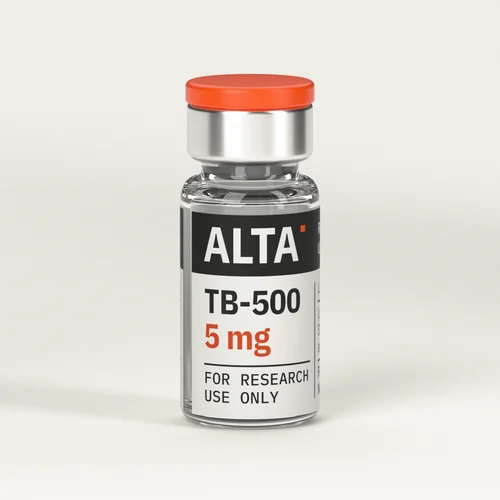
TB-500 is the obvious one: same thymosin family name, entirely different job. Ours is full-length thymosin beta-4, 43 residues, in a sealed 5 mg vial at £24.99 with purity by and identity by mass spectrometry on the lot certificate. It is the compound to reach for when the question is about actin, cell migration or tissue repair rather than immune signalling, and our TB-500 explainer is careful about the animal data.
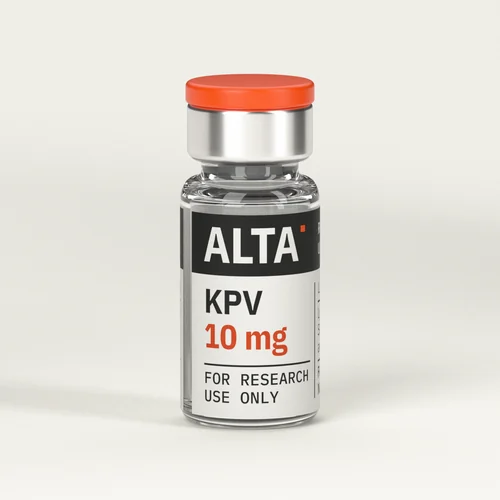
For the inflammation side of this story, KPV is closer in spirit: a three-amino-acid fragment of alpha-MSH, 10 mg for £29.99, researched in immune and inflammation models including mouse colitis, where it reduced inflammatory markers without the pigmentation activity of the parent hormone. Our KPV article covers the mechanism work. Both are laboratory reagents for research use only, with no licence anywhere and no claims from us; see our UK peptide law notes.
Sources
- US Food and Drug Administration. Thymosin Alpha-1 (Ta1) Related Bulk Drug Substances. Pharmacy Compounding Advisory Committee briefing, 4 December 2024.
- Wu J, Pei F, Zhou L, et al. The efficacy and safety of thymosin alpha-1 for sepsis (TESTS): multicentre, double blinded, randomised, placebo controlled, phase 3 trial. BMJ, 15 January 2025.
- Wu J, Zhou L, Liu J, et al. The efficacy of thymosin alpha 1 for severe sepsis (ETASS): a multicenter, single-blind, randomized controlled trial. Critical Care, 17:R8, 2013.
- Maio M, Mackiewicz A, Testori A, et al. Large randomized study of thymosin alpha 1, interferon alfa, or both with dacarbazine in metastatic melanoma. Journal of Clinical Oncology, 28(10):1780 to 1787, 2010.
- Mutchnick MG, Lindsay KL, Schiff ER, et al. Thymosin alpha1 treatment of chronic hepatitis B: a phase III randomized, double-blind, placebo-controlled study. Journal of Viral Hepatitis, 6(5):397 to 403, 1999.
- SciClone Pharmaceuticals Inc. Annual Report on Form 10-K, fiscal years 2011 and 2013. US SEC.
- Rost KL, Wierich W, Fuder H, et al. Pharmacokinetics of thymosin alpha1 in healthy volunteers. International Journal of Clinical Pharmacology and Therapeutics, 1999.
- World Anti-Doping Agency. Prohibited List 2026, sections S0 and S2.3.
Questions people ask
What is thymosin alpha-1?
Thymosin alpha-1 is a 28-amino-acid peptide that the body cuts from a larger protein called prothymosin alpha. It was first isolated from calf thymus extract in 1977, and the thymus is the organ where T cells mature, which is why it has been studied as an immune modulator for nearly fifty years. The synthetic copy, thymalfasin, is a licensed medicine in some countries under the brand name Zadaxin. Researchers abbreviate it Ta1, so a vial sold as a ta1 peptide means the same molecule.
Where is thymosin alpha-1 approved?
SciClone has told its investors the product is approved in over 30 countries, mostly across the Asia-Pacific region, Latin America, Eastern Europe and the Middle East, for hepatitis B and C and as a vaccine or chemotherapy adjuvant. China is by far the largest market and Italy is the only approval in Europe. It is not approved in the US, Japan or the UK.
Does thymosin alpha-1 work in sepsis?
The best evidence says no. ETASS, in 361 patients with severe sepsis, reported 28-day mortality of 26% against 35% in controls, but it was only single-blind. The larger TESTS trial then randomised 1,106 adults and found 28-day deaths of 23.4% against 24.1% on placebo, concluding there was no clear evidence of benefit.
Did thymosin alpha-1 help in COVID-19?
The studies were mostly small, retrospective and run early in the pandemic. The FDA reviewed four meta-analyses in December 2024: three found no reduction in mortality, and the fourth reported lower mortality but no reduction in mechanical ventilation or length of stay. Guidelines from the NIH, the WHO and the Infectious Diseases Society of America do not discuss it.
What about cancer?
The largest study is an open-label randomised trial in 488 patients with stage IV melanoma, published in 2010, adding thymosin alpha-1 to chemotherapy with or without interferon. No thymosin arm differed significantly from the control arm on best overall response rate. Liver and lung cancer trials were small.
What is the difference between thymosin alpha-1 and TB-500?
They are unrelated molecules sharing a family name given in the 1970s, when both were found in the same thymus extract. Thymosin alpha-1 is 28 amino acids, comes from prothymosin alpha and signals to immune cells. Thymosin beta-4, which TB-500 refers to, is 43 amino acids, from a different gene family, and binds actin inside cells to drive cell migration and repair.
Is thymosin alpha-1 legal in the UK?
It is not a controlled drug, so holding it as a laboratory reagent is not an offence. It has no MHRA marketing authorisation, so it cannot be prescribed or dispensed here, and supplying an unlicensed product for human use is an offence under the Human Medicines Regulations 2012. A summary, not legal advice.
Does ALTA sell thymosin alpha-1?
No. ALTA PEPTIDES does not stock it. From the same historical thymus extract we supply TB-500, full-length thymosin beta-4, the actin-binding repair protein, and KPV, a three-residue anti-inflammatory peptide studied in immune and inflammation models. Both are for laboratory research only.
What is the thymosin alpha 1 peptide?
A 28-amino-acid immune-signalling peptide, first isolated from calf thymus in 1977. It is sold as the medicine thymalfasin, brand name Zadaxin, in more than 30 countries, but it is not licensed in the UK or the US.
What is thymosin alpha 1 used for?
Where it is licensed, the uses of thymosin alpha 1 are narrow. The Singapore label covers chronic hepatitis B, alone or with interferon. The Italian label covers use around influenza vaccination in immunocompromised people. The FDA's 2024 review found insufficient evidence to determine its effectiveness for the treatment of hepatitis B.
Who do the Zadaxin labels say should not be given thymosin alpha 1?
The Singapore label treats it as contraindicated in patients who are deliberately immunosuppressed, such as organ transplant patients, unless the benefit clearly outweighs the risk. According to the FDA review, the Italian label excludes children, pregnancy and lactation, and asks for case-by-case assessment in autoimmune diseases.
Can blood tests show whether treatment with thymosin alpha 1 is working?
Trials have tracked immune markers. ETASS reported a greater rise in monocyte HLA-DR on days 3 and 7. TESTS measured the same marker and found a similar change in both arms after a week.
Information, not advice. This article summarises published research; nothing here is guidance on human or veterinary use. Products are sold under our research use policy.