Sleep is run by peptides. Orexin from the hypothalamus keeps the brain awake; melanin-concentrating hormone from neighbouring cells promotes sleep; the pineal gland's output is timed by the same circuits. So it is not surprising that peptides for sleep is a common search, or that two research peptides, DSIP and epitalon, sit inside this literature. This article explains what the sleep-regulating peptide systems are, what DSIP and epitalon are and what their research reports, and how strong that research is. It describes the science; it is not guidance on using anything for sleep or for anything else.
- DSIP (delta sleep-inducing peptide) is a nine-residue peptide isolated from rabbit blood in 1977 by Schoenenberger and Monnier, named for the increase in delta-wave sleep it produced in recipient rabbits.
- Later DSIP studies in animals and small human series gave inconsistent results on sleep itself; more consistent findings concern stress hormone and pain-threshold measures.
- Epitalon is a synthetic tetrapeptide (Ala-Glu-Asp-Gly) modelled on the pineal extract epithalamin; animal studies report restored melatonin rhythm in aged animals.
- The body's own sleep peptides include orexin (wakefulness), melanin-concentrating hormone, and the pineal system; licensed sleep drugs that target orexin are small molecules, not peptides.
- No peptide is a licensed sleep medicine anywhere. DSIP and epitalon are supplied here as research reagents only.
The body's sleep peptides
Orexin, also called hypocretin, is a pair of peptides made by a small cluster of hypothalamic neurons. When those neurons fire, the brain stays awake; when they are lost, as in narcolepsy, wakefulness collapses. The licensed drugs that block orexin receptors, suvorexant and its successors, are the first sleep medicines built on this biology, and they are small molecules taken as tablets, not peptides. Melanin-concentrating hormone is the sleep-promoting counterpart. Galanin, neuropeptide Y and the pineal system round out the picture. These are the systems any sleep peptide research has to be measured against, and the point of listing them is that none of the research peptides below is one of them.
DSIP: the peptide named for sleep
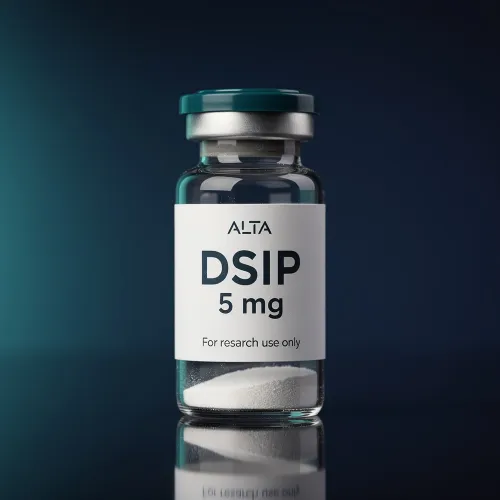
In 1977 Guido Schoenenberger and Marcel Monnier in Basel reported that blood taken from rabbits in electrically induced slow-wave sleep, and infused into other rabbits, increased delta-wave sleep in the recipients. They isolated the responsible factor, a nine-residue peptide, Trp-Ala-Gly-Gly-Asp-Ala-Ser-Gly-Glu, and named it delta sleep-inducing peptide. It has since been found in human blood, cerebrospinal fluid and several tissues, and it remains one of the more unusual molecules in the field because forty years on, its receptor and its mechanism are still unknown.
The subsequent research is mixed. Some animal studies reproduced an increase in slow-wave sleep; others found no effect or the opposite. A small number of human studies in the 1980s and 1990s, in insomnia and in withdrawal states, reported improved sleep measures in some and nothing in others, and none was large or well controlled by modern standards. The more consistent thread in the literature is not sleep at all: DSIP has repeatedly been reported to lower corticotropin and cortisol responses to stress in animals, to raise pain thresholds, and to influence the timing of hormone rhythms. That makes it a research tool for stress and rhythm biology as much as for sleep, and it is why the compound is still made and studied. Our DSIP explainer and product page cover the compound in detail.
Epitalon and the pineal peptides
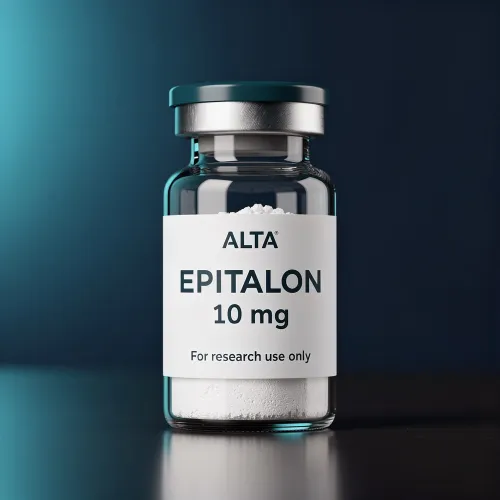
Epitalon (epithalon) is a synthetic tetrapeptide, Ala-Glu-Asp-Gly, designed by Vladimir Khavinson's group in St Petersburg to mimic epithalamin, an extract of the pineal gland. The pineal gland produces melatonin on a circadian schedule that flattens with age. The Russian literature on epitalon, which is extensive but largely from one institute and much of it not in English-language journals, reports that it restored the amplitude of the melatonin rhythm in aged monkeys and rodents, activated telomerase in cultured human cells, and extended lifespan in mice and rats. That is a pineal and ageing literature rather than a sleep literature: the sleep connection runs through melatonin rhythm, and no study has measured sleep as an outcome. Our MOTS-c and epitalon article and product page set out what the research reports and its limitations.
Selank and the anxiolytic peptides
Selank, a tuftsin analogue, is studied for anxiety-like behaviour in rodents and has a small Russian clinical literature in anxiety, and because sleep and anxiety are entangled it is sometimes listed as a sleep peptide. It is not one: no sleep outcome has been measured. Our Semax versus Selank article covers what has.
How strong is the evidence?
Weak, by the standards of sleep medicine. DSIP has a striking origin story and a half-century of inconsistent follow-up with no mechanism. Epitalon has a body of work from a single institute that has not been independently replicated in the West and does not measure sleep. Neither has a controlled modern trial, neither has a licence anywhere, and the honest summary is that they are research tools in an area where the real sleep biology is being worked out with other molecules. That is a reason for a laboratory to be interested; it is not a basis for any claim about people.
What ALTA PEPTIDES supplies
DSIP as a 10 mg lyophilised vial and epitalon as a 100 mg lyophilised vial, each tested per lot by an independent UK laboratory with the certificate published, held in UK stock and dispatched the same working day before 1pm. Both are supplied for laboratory research only under our research use policy; we make no claims about sleep or anything else in people, and we decline orders that suggest that use.
Questions people ask
What is DSIP?
Delta sleep-inducing peptide, a nine-residue sequence (Trp-Ala-Gly-Gly-Asp-Ala-Ser-Gly-Glu) found in the blood of rabbits in slow-wave sleep and later in humans and other mammals.
Does DSIP induce sleep?
In the original rabbit experiments, yes, as measured by EEG. Replications in other animals and the small human studies since have been inconsistent, and the mechanism has never been established.
What is epitalon studied for?
Its Russian literature covers pineal function and melatonin rhythm in aged animals, telomerase activity in cultured cells, and lifespan in rodents. It is not a sleep drug and has no licence.
Are any peptides licensed for sleep?
No. The newest sleep medicines, the orexin receptor antagonists, act on a peptide system but are small molecules taken as tablets.